
Trying to trace a lost relative or piece together your family history can feel daunting, especially when clues are scattered across different sources. For many in the United Kingdom, building a detailed profile is the first step toward reconnecting or verifying important identity details. With a methodical approach to gathering information, you maximise search accuracy and open new paths in your ancestry journey, laying the groundwork for reliable results and meaningful discoveries.
Table of Contents
- Step 1: Gather Essential Information For Address Tracing
- Step 2: Select And Access Reliable Tracing Services Online
- Step 3: Submit Your Tracing Request Securely
- Step 4: Verify And Interpret Tracing Results Confidently
Quick Summary
| Key Insight | Explanation |
|---|---|
| 1. Gather detailed personal information | Comprehensive data increases your chances of finding the right person effectively. |
| 2. Choose a reliable tracing service | Evaluate options based on accuracy, speed, and customer support to ensure success. |
| 3. Submit requests accurately | A complete request with all relevant details helps speed up processing and improve outcomes. |
| 4. Verify results thoroughly | Cross-check details against known information to confirm you’ve identified the correct person. |
| 5. Use visual aids for comparisons | Visual documentation of known and found data highlights discrepancies and aids in verification. |
Step 1: Gather essential information for address tracing
Before you start searching, you need to collect every scrap of information you have about the person you’re trying to locate. This foundation determines how effectively you can search through public records and databases. The more details you have, the better your chances of finding the right person.
Start by writing down the full name of the person, including any aliases, nicknames, or previous surnames they may have used. Add their date of birth if you know it. This combination alone narrows down results significantly. Next, list any last known address, phone numbers, or email addresses you possess.
Building this detailed profile involves gathering several key pieces of information:
- Full names with any aliases or variations
- Date of birth or approximate age
- Last known address or previous addresses
- Telephone numbers (mobile or landline)
- Previous employers or workplaces
- Social connections or family members
- Known locations, habits, or frequent places
- Any professional qualifications or memberships
A methodical approach to gathering information minimises guesswork and directs your searches towards success.
Documenting every piece of available information serves as your search parameters. When you have personal details like previous jobs, social connections, or known locations, you’re giving yourself multiple angles to search from. This structured information works like a map guiding your investigation rather than shooting in the dark.
If you’re tracing a lost relative, you might also note down any family milestones, maiden names, or generational information. For identity verification, collect any official documents that contain address history. The point is to exhaust what you already know before turning to online search tools.
Understanding what address tracing involves helps you recognise which details matter most in your search.
Pro tip: Create a simple document or spreadsheet listing all information with separate columns for confirmed facts versus uncertain details—this visual organisation helps you spot gaps and prevents you from repeating the same searches.
Step 2: Select and access reliable tracing services online
Now that you have your information organised, you need to find a trustworthy service to conduct your search. The right platform makes the difference between a quick result and wasted time on unreliable tools. You’re looking for services that combine accuracy with straightforward access.
Start by identifying what type of search you need. Are you looking for a reverse address search to find who lives at a specific location, or do you need to trace someone by name? Different services specialise in different searches, so clarity on your goal helps you choose wisely.
When evaluating online tracing services, consider these key factors:
- Accuracy and data sources - Services using verified public records produce reliable results
- User reviews and testimonials - Look for consistent positive feedback from real users
- Transparent pricing - Costs should be clearly stated before you commit to anything
- Customer support availability - Responsive help matters if issues arise
- Privacy and security - Your personal data should be protected during searches
- Speed of results - Some services deliver findings within hours rather than days
Understanding how tracing services operate helps you recognise what makes a service reliable versus questionable.
Don’t settle for the first service you find. Compare at least two or three options to see which offers the best combination of speed, cost, and reliability. Many reputable services offer sample searches or trial periods so you can test their accuracy before paying full price.
Once you’ve selected a service, registration typically takes just a few minutes. You’ll create an account, verify your email, and then gain access to the search tools. At this stage, you’re ready to enter the information you gathered in Step 1.
Check whether your chosen service provides customer support before making your purchase. Services with live chat, email support, or phone lines indicate they stand behind their product and want to help users succeed.
To help you decide which tracing service is best for your needs, here is a comparison of important evaluation factors:
| Evaluation Factor | Why It Matters | What to Look For |
|---|---|---|
| Data accuracy | Ensures reliable search results | Uses verified public records |
| Customer support quality | Assists with issues or confusion | Responsive and multi-channel |
| Speed of result delivery | Faster turnaround for urgent cases | Results in hours, not days |
| Transparent pricing | Avoids hidden fees and surprises | Clearly displayed costs upfront |
| Privacy and security | Protects your personal information | Encrypted forms and secure login |
Pro tip: Read customer reviews on independent sites rather than relying solely on testimonials on the service’s own website—this gives you a more balanced picture of whether the service actually delivers results.
Step 3: Submit your tracing request securely
You’ve gathered your information and chosen a service. Now comes the actual submission—and getting this step right matters more than you might think. A complete, well-organised request speeds up processing and improves the accuracy of your results.

Start by filling in the search details form with all the information you collected earlier. Include the person’s full name, date of birth, last known address, and any other relevant details. Be as thorough as possible, even if some fields feel optional—extra information helps the service locate the right person.
When submitting your request, you’ll typically need to provide:
- Full name and any known aliases
- Date of birth or approximate age
- Last known address or area
- Any contact details you possess
- The reason for your search
- Your relationship to the person (for verification purposes)
- Any supporting documentation if required
Reliable submission procedures reduce delays and improve search accuracy whilst ensuring your request meets legal requirements. Always check whether your service asks for supporting documents. Some requests, particularly those involving data protection compliance or inheritance matters, may require proof of your reason for tracing.
Most reputable services use encrypted submission forms to protect your personal information during the upload process. Look for the padlock icon in your browser’s address bar—this indicates a secure connection. Never email sensitive details or use unsecured messaging when submitting requests.
Review your submission carefully before hitting the final send button. Typos in names or addresses can lead the service down the wrong path. Double-check dates, postcodes, and spelling to avoid starting your search on the wrong footing.
Once submitted, you’ll receive a confirmation email with your case reference number. Save this number—you’ll need it to track your request or contact customer support. Most services provide updates on their processing timeline, so you’ll know roughly when to expect results.
Pro tip: Keep copies of everything you submit, including your confirmation number and submission timestamp—this documentation proves you followed proper procedures and helps resolve any disputes about what information you originally provided.
Step 4: Verify and interpret tracing results confidently
Results have arrived. Now you need to check whether the information actually matches your search target. Not every result is the right person, so verification is crucial before you act on the findings.
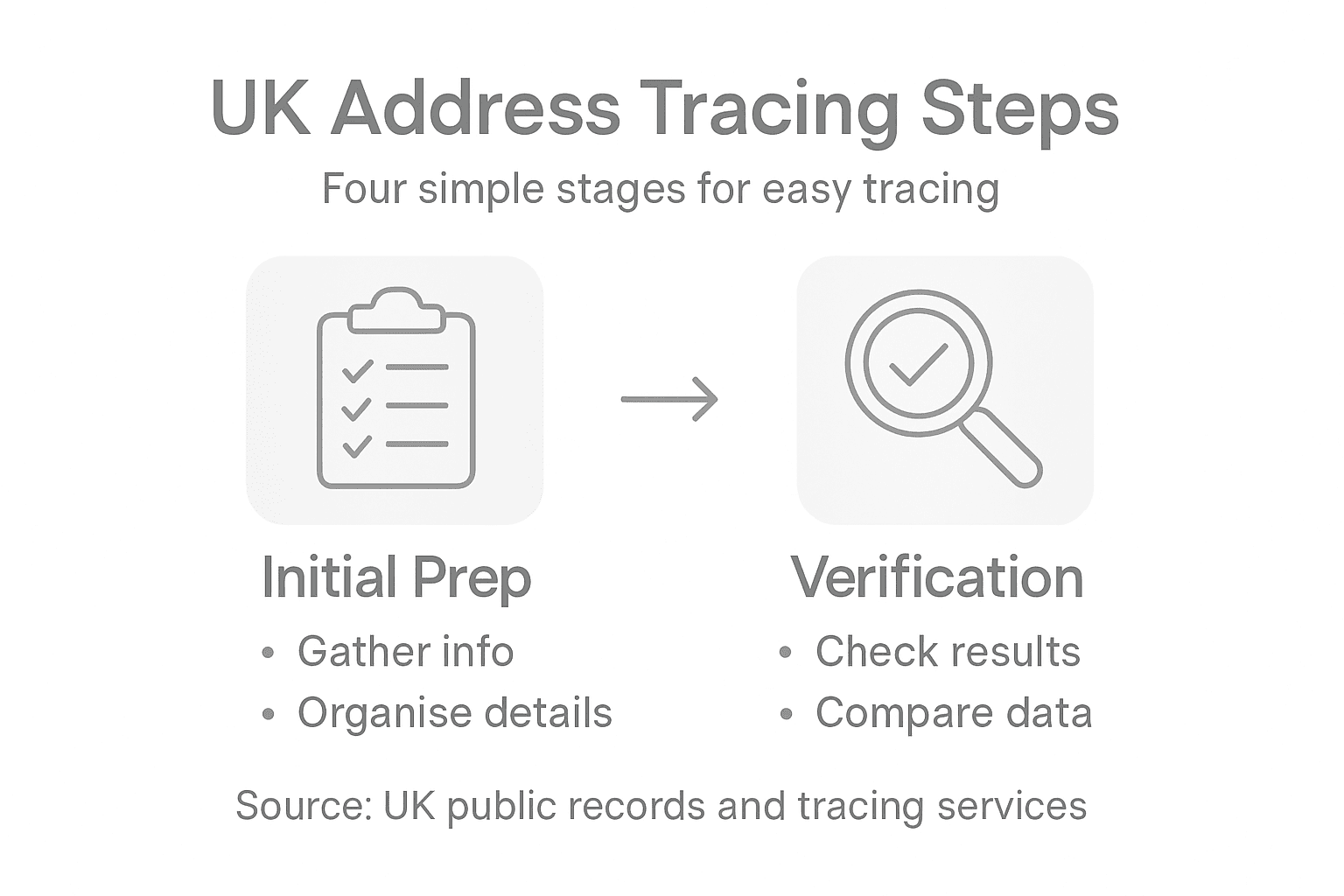
Start by comparing the returned details against what you already know. Does the name match exactly or are there variations? Check the address—does it align with what you expected based on your earlier information? Look at the date of birth or age range to confirm you’ve found the right individual.
When reviewing your results, examine these key elements:
- Name accuracy - Verify spelling, middle names, and whether aliases are listed correctly
- Address history - Check if previous addresses match your records or expectations
- Timeline consistency - Ensure dates and locations make sense chronologically
- Contact information - Confirm phone numbers or email addresses seem legitimate
- Related individuals - Review any family members or associates listed
- Data source references - Look for notes about where the service sourced its information
Multiple matching data points increase confidence that you’ve identified the correct person, not just someone with a similar name.
Don’t rely on a single piece of information. If the name, address, and approximate age all align with what you’re searching for, you’ve likely found the right person. However, if only the name matches and nothing else checks out, exercise caution before acting.
Some services provide confidence ratings or match scores indicating how reliable the result is. Higher scores suggest the data is comprehensive and matches across multiple records. Lower scores may indicate partial matches that need careful scrutiny.
If results seem unclear or you’ve received multiple potential matches, contact your tracing service’s customer support. They can clarify their methodology or run additional checks to help you identify the correct individual.
Below is a summary of recommended steps for verifying tracing results effectively:
| Step | Purpose | Result if Completed |
|---|---|---|
| Compare details | Checks accuracy of name, address, DOB | Increases confidence in match |
| Examine history | Reviews past addresses and timelines | Confirms identity consistency |
| Contact support | Clarifies multiple or unclear matches | Ensures correct individual |
| Review match scores | Assesses overall result reliability | Prioritises trustworthy leads |
Once you’re confident you’ve found the right person, you can safely proceed with contacting them or sharing the information with relevant parties like solicitors handling inheritance matters.
Pro tip: Create a simple comparison document listing what you knew before the search and what the results show—this visual side-by-side check makes discrepancies immediately obvious and gives you confidence in your verification process.
Discover Accurate UK Address Tracing with Expert Support
Tracing UK addresses can feel overwhelming when facing incomplete information or unreliable sources. This guide highlights the critical need for precise data gathering and trustworthy investigative services. At UKtrace.co.uk, we specialise in name and address searches UK that make your search simpler, more secure and remarkably accurate. Whether you need to confirm identities, find lost relatives or verify contact details, our professional tools and confidential approach remove the guesswork from your tracing efforts.
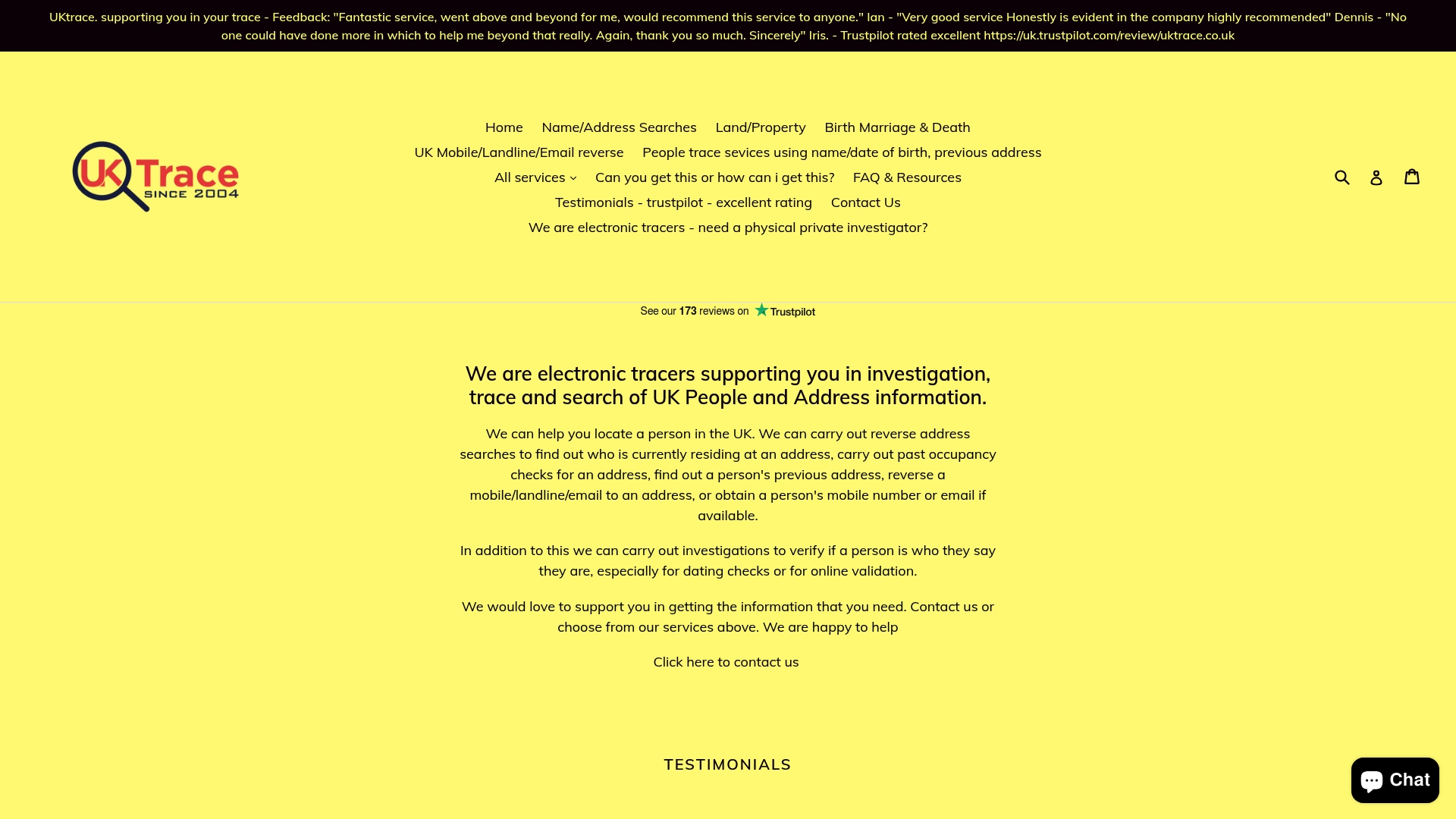
Start your journey today with industry-leading electronic tracing solutions designed to protect your privacy and deliver results swiftly. Do not let outdated methods slow your progress—visit UKtrace.co.uk now and take the confident step towards the clarity and peace of mind you deserve.
Frequently Asked Questions
How do I start tracing a UK address?
Begin by gathering as much information as possible about the person you’re trying to find, including their full name, date of birth, and any last known addresses. Compile these details into a document to use as your search parameters.
What information is essential for tracing someone’s address?
To effectively trace an address, collect the person’s full names (including aliases), date of birth, last known address, and any contact details like phone numbers or email addresses. This comprehensive profile increases your chances of successfully locating the individual.
What should I look for in reliable tracing services?
When evaluating tracing services, consider their accuracy, user reviews, and transparent pricing. Look for services that use verified public records and provide clear customer support options to ensure a reliable experience.
What steps do I take to submit a tracing request?
Fill in the search details form with all relevant information, including the person’s full name, date of birth, and last known address. Ensure your submission is as thorough as possible to enhance the accuracy of the tracing process.
How can I verify the results from a tracing service?
Compare the returned details with the information you already have, focusing on name accuracy, address history, and related individuals. Confirm multiple data points match to ensure you have identified the correct person before proceeding with any actions.
What should I do if I receive multiple potential matches?
If you encounter multiple results, contact the tracing service’s customer support for clarification. They can assist with further checks or provide additional information to help you identify the right individual.
Recommended
- How to Trace UK Addresses for Personal Searches Online – UK Trace
- Address Tracing Process UK: How to Locate People Fast – UK Trace
- What Is Address Tracing and Why Accuracy Matters – UK Trace
- Step-by-Step Guide to Tracing UK Residents Online – UK Trace
- Local SEO Step by Step: Boost Your UK Business Fast - Paul Baguley