
Searching for missing family or uncovering your ancestry often leads to dead ends and frustrating gaps in public records. For many people in the United Kingdom, finding lost relatives or confirming identity means sifting through confusing legal and privacy challenges. Professional tracing services offer reliable, legally compliant solutions that respect privacy rights and use verified information sources, giving you a clear path forward without risking unnecessary privacy breaches.
Table of Contents
- Tracing Services UK: Meaning and Common Myths
- Main Types of Tracing Services in the UK
- How Professional Tracing Services Operate
- Data Privacy, Legal Standards, and Client Rights
- Risks, Costs, and Common Tracing Pitfalls
Key Takeaways
| Point | Details |
|---|---|
| Tracing services in the UK provide specialized investigative solutions | They are designed to locate people or verify personal information using legally compliant methods. |
| Common misconceptions include the speed and invasiveness of tracing services | Reputable services do not guarantee instant results and operate within strict legal frameworks. |
| Different types of tracing services cater to various needs | Services include personal tracing, legal tracing, debt recovery, background checks, and probate/inheritance tracing. |
| Understanding legal standards is crucial for privacy and compliance | Tracing services must adhere to data protection regulations, ensuring client rights and privacy are respected. |
Tracing Services UK: Meaning and Common Myths
Tracing services represent specialized investigative solutions designed to help individuals and organizations locate specific people or verify personal information within the United Kingdom. These professional services go beyond simple online searches, offering comprehensive and legally compliant methods to uncover vital connections and track down individuals with precision.
At their core, tracing services utilize multiple data sources and sophisticated search techniques to find current addresses, contact details, and personal information. The primary objectives of these services include:
- Reuniting long-lost family members
- Verifying individual identities
- Supporting legal investigations
- Conducting background checks
- Locating potential witnesses or beneficiaries
Contrary to popular misconceptions, tracing services are not invasive or illegal. Reputable providers like professional trace specialists operate within strict legal frameworks, ensuring all searches comply with data protection regulations. They access publicly available records and authorized databases to generate accurate reports.
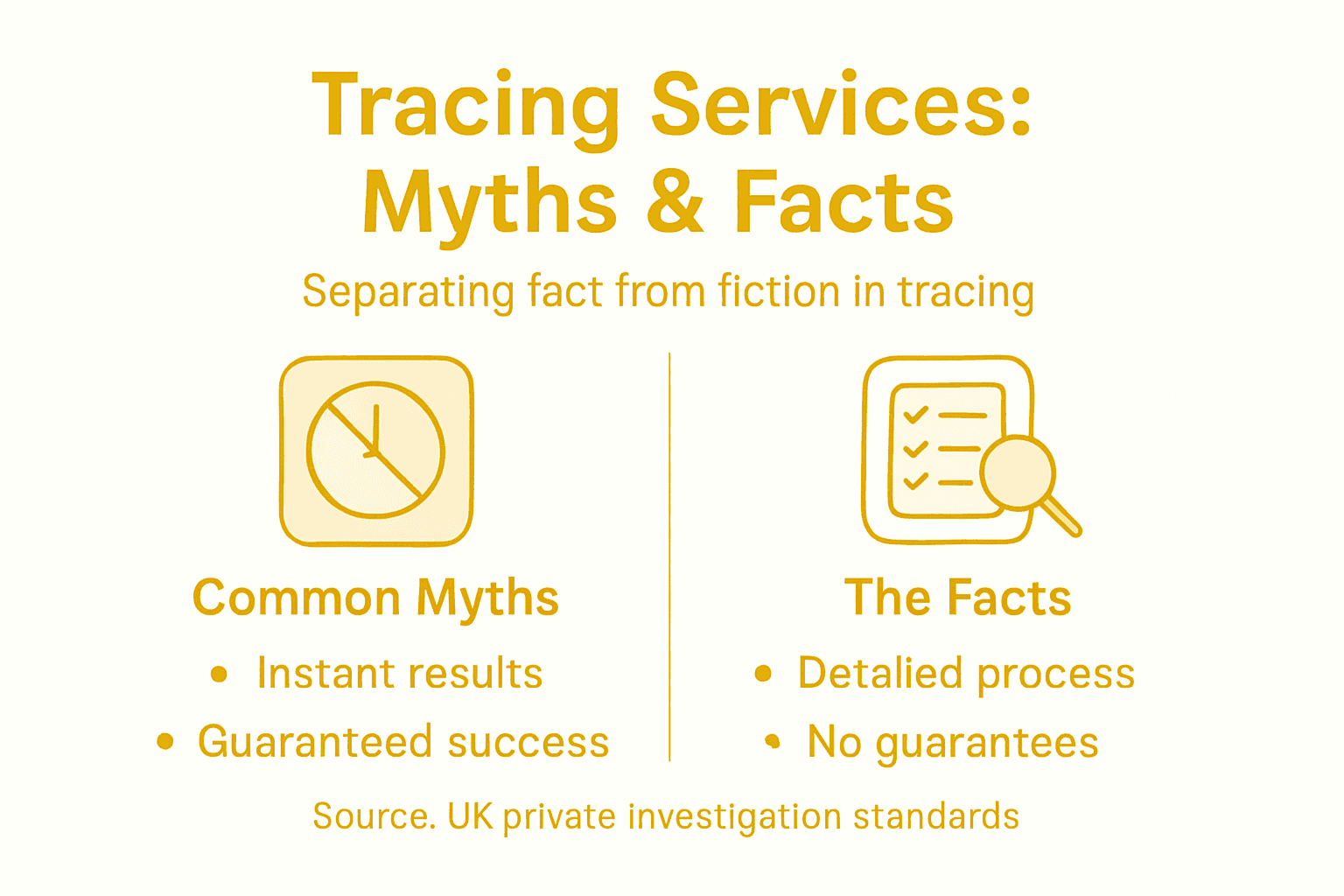
Many people mistakenly believe tracing services can instantly produce results or guarantee finding someone. However, successful traces depend on multiple factors such as available public records, individual privacy settings, and the complexity of the search. Professional tracing experts understand these nuanced challenges and employ strategic approaches to maximize search effectiveness.
Pro tip: Always provide as much detailed information as possible when requesting a trace, including full name, last known location, and any additional identifying details to improve search accuracy.
Main Types of Tracing Services in the UK
Tracing services in the United Kingdom encompass a diverse range of specialized search techniques designed to locate individuals or verify critical personal information. These services cater to various professional and personal needs, utilizing sophisticated investigative methods to uncover connections across different scenarios.
The primary types of tracing services include:
- Personal Tracing: Helping individuals find long-lost family members, friends, or reconnect with past contacts
- Legal Tracing: Supporting legal proceedings by locating witnesses, beneficiaries, or parties involved in legal disputes
- Debt Recovery Tracing: Assisting financial institutions and businesses in tracking down individuals with outstanding financial obligations
- Background Check Tracing: Verifying personal histories for employment, tenancy, or other screening purposes
- Probate and Inheritance Tracing: Locating potential heirs or beneficiaries in estate settlements
Professional tracing agencies typically utilize multiple data sources to conduct comprehensive searches. These include credit reference agencies, public records, electoral rolls, and authorized databases. Each search is conducted under strict data protection guidelines to ensure legal compliance and individual privacy.

Businesses and individuals can access specialized tracing services like skip trace for targeted investigations. These services employ advanced techniques to locate individuals who may have intentionally or unintentionally become difficult to contact. The complexity of traces varies depending on the available information and the specific objectives of the search.
Pro tip: Maximize the effectiveness of tracing services by providing as much detailed and accurate initial information as possible, including full names, last known addresses, and any additional identifying details.
Here’s a quick comparison of the main types of tracing services and their typical use cases:
| Type of Service | Typical Client | Example Scenario |
|---|---|---|
| Personal Tracing | Private individuals | Reuniting with lost relatives |
| Legal Tracing | Law firms, courts | Locating court witnesses |
| Debt Recovery Tracing | Financial institutions | Tracking debt defaulters |
| Background Check Tracing | Employers, landlords | Screening tenant applicants |
| Probate/Inheritance | Estate administrators | Finding potential heirs |
How Professional Tracing Services Operate
Professional tracing services employ sophisticated methodologies to locate individuals and verify personal information with precision and legal compliance. These specialized investigations require a comprehensive approach that combines multiple data sources, advanced technological tools, and strategic research techniques.
The core operational process typically involves several key stages:
- Initial Information Gathering: Collecting basic details such as full name, date of birth, and last known address
- Database Cross-Referencing: Accessing multiple authorized databases including credit agencies, public records, and electoral rolls
- Verification Procedures: Confirming located information through secondary contact methods
- Privacy Compliance: Ensuring all searches adhere to strict data protection regulations
- Reporting: Generating comprehensive and accurate trace reports for clients
Advanced tracing services like in-depth trace follow-on utilize cutting-edge investigative techniques that go beyond basic searches. These methods involve sophisticated cross-referencing of digital and physical records, allowing investigators to uncover connections that might remain hidden through conventional search methods.
The complexity of tracing services requires a nuanced approach. Investigators must balance the need for comprehensive information with stringent legal and ethical guidelines. Each trace involves carefully navigating privacy laws, using only authorized data sources and maintaining the highest standards of confidentiality and professional conduct.
Pro tip: Always provide the most recent and accurate initial information possible, as even minor details can significantly enhance the effectiveness of a professional trace.
Data Privacy, Legal Standards, and Client Rights
Tracing services in the United Kingdom operate within a complex legal framework designed to protect individual privacy and ensure ethical information gathering. The intricate balance between investigative needs and personal data protection requires comprehensive understanding of multiple regulatory requirements.
Key legal standards and privacy protections include:
- Consent Requirements: Explicit permission for data processing
- Data Minimization: Collecting only necessary personal information
- Purpose Limitation: Using data solely for intended tracing purposes
- Storage Restrictions: Maintaining data only for required duration
- Individual Rights: Protecting subjects’ ability to access and challenge information
Data protection practices are rigorously monitored by the Information Commissioner’s Office, which ensures tracing services comply with stringent legal standards. Organizations must demonstrate transparent data handling, secure storage, and robust protection mechanisms that safeguard individual privacy.
The regulatory landscape demands that tracing services maintain strict investigative protocols while respecting legal boundaries. This includes implementing comprehensive data protection strategies that protect vulnerable individuals and prevent unauthorized information disclosure. Professional tracing agents must navigate these complex requirements, balancing investigative objectives with legal and ethical considerations.
Pro tip: Request and review the data protection policy of any tracing service before engaging their services to ensure comprehensive privacy safeguards.
The following table summarizes essential legal safeguards for tracing services in the UK:
| Legal Safeguard | Practical Meaning |
|---|---|
| Consent Requirements | Gathering explicit data permission |
| Data Minimization | Only collecting relevant details |
| Purpose Limitation | Using data solely for tracing |
| Storage Restrictions | Destroying data after use |
| Individual Rights | Allowing data access and correction |
Risks, Costs, and Common Tracing Pitfalls
Tracing services, while valuable, come with inherent complexities and potential challenges that clients must carefully navigate. Understanding these risks is crucial for making informed decisions and managing expectations throughout the tracing process.
Common risks and potential pitfalls include:
- Misidentification: Accidentally locating incorrect individuals
- Cost Escalation: Unexpected fees and ongoing investigation expenses
- Limited Information: Incomplete or outdated data sources
- Privacy Violations: Potential breaches of personal information
- False Expectations: Unrealistic assumptions about trace outcomes
Research into tracing agent practices reveals significant concerns about service quality and potential financial risks. Local authorities have encountered issues with lack of competitive pricing and questionable accuracy, highlighting the importance of thorough due diligence when selecting a tracing service.
Financial considerations play a critical role in tracing investigations. Costs can vary widely depending on the complexity of the search, with factors like depth of investigation, required resources, and specific trace objectives directly impacting overall expenses. Clients should request detailed pricing structures upfront and understand potential additional charges for extended or complex traces.
Pro tip: Request a comprehensive breakdown of potential costs and investigation methods before committing to a tracing service, and always verify the agency’s track record and professional credentials.
Unlock the Power of Expert Tracing Services Today
Locating a lost relative or verifying a contact’s details can feel overwhelming. The article highlights challenges such as misidentification, incomplete data, and legal limits on information access. If you want to overcome these hurdles and achieve accurate results within legal boundaries, professional support is crucial. Our Name and Address Searches UK service uses sophisticated investigative techniques designed to provide the precise information you need quickly and confidentially.
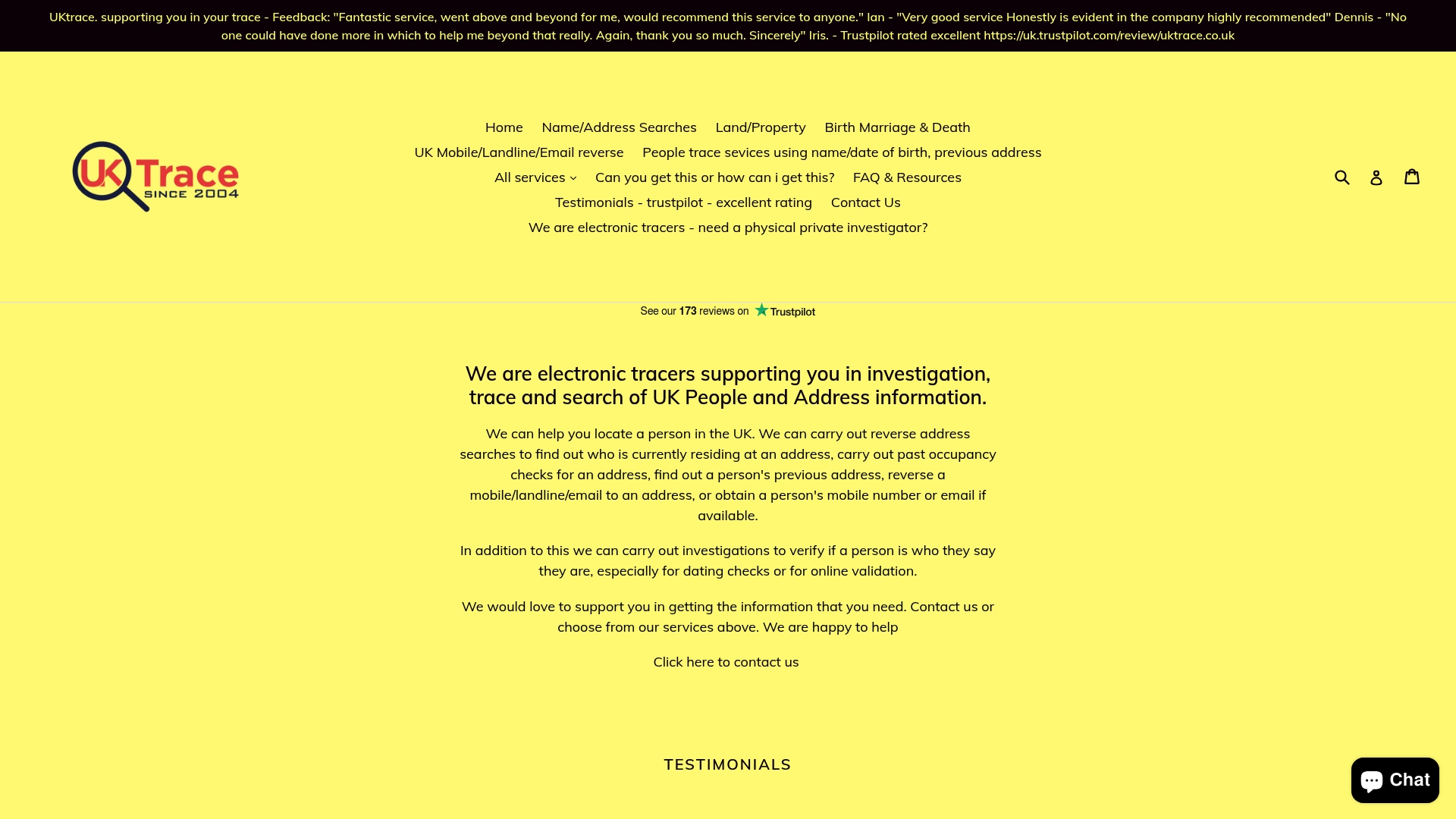
Take control of your search now with UKtrace.co.uk. Whether your goal is reconnecting with family, verifying identities, or supporting legal investigations, our expert tracing solutions deliver reliable results with full data privacy protections. Visit UKtrace.co.uk and explore our dedicated Birth, Marriage and Death Searches to uncover vital connections. Start your search today and trust the professionals who put accuracy and confidentiality first.
Frequently Asked Questions
What are tracing services and how do they work?
Tracing services are specialized investigative solutions used to locate individuals or verify personal information. They utilize multiple data sources and sophisticated search techniques, including accessing public records, electoral rolls, and authorized databases, to find current addresses and contact details.
What types of information can tracing services uncover?
Tracing services can uncover a variety of personal information, including current addresses, contact details, and verification of identities. They can also assist in locating long-lost family members, verifying identities for legal purposes, or conducting background checks.
Are tracing services legal and ethical?
Yes, reputable tracing services operate within strict legal frameworks, ensuring compliance with data protection regulations. They use publicly available records and authorized databases to ensure that searches are ethical and respect individual privacy.
How can I improve the accuracy of a tracing request?
To improve the accuracy of a tracing request, provide as much detailed information as possible. This includes the person’s full name, last known location, date of birth, and any other identifying details that can aid in the search.