
Locating a lost family member or verifying someone’s identity in the United Kingdom often feels overwhelming without the right help. Reliable address tracing services can make all the difference, but success hinges on gathering thorough information and choosing providers who follow official verification standards. This guide walks you through essential steps for accurate, confidential, and legally compliant address tracing, helping you move forward with confidence and protect the privacy of those involved.
Table of Contents
- Step 1: Gather Essential Information for Tracing
- Step 2: Select a Trusted Address Tracing Service
- Step 3: Submit Your Address Tracing Request
- Step 4: Review and Verify Received Results
- Step 5: Document and Safeguard Tracing Outcomes
Quick Summary
| Key Message | Explanation |
|---|---|
| 1. Collect detailed personal information | Gather full names, addresses, and physical descriptions to improve tracing accuracy significantly. |
| 2. Choose a compliant tracing service | Ensure the service adheres to UK data protection laws and has a history of successful traces. |
| 3. Include precise details in your request | Provide comprehensive information, including the reason for tracing and supporting documents, to facilitate effective searches. |
| 4. Verify the accuracy of results | Cross-reference traced information with official records to confirm the identity and details of the individual located. |
| 5. Safeguard tracing results | Use secure storage methods and proper protocols to protect sensitive information gathered during the tracing process. |
Step 1: Gather Essential Information for Tracing
Tracing a person in the United Kingdom requires strategic preparation and meticulous documentation of key personal details. Your initial goal is assembling a comprehensive profile that will help investigators locate the individual quickly and efficiently.
When starting your tracing process, you’ll want to collect specific information that significantly improves search accuracy. This includes:
- Full legal name and any known aliases
- Most recent known address or contact information
- Physical description including height, weight, and distinguishing features
- Recent photographs showing current appearance
- Known employment or educational institutions
- Contact details of friends or family members
- Medical conditions or unique identifying characteristics
The UK National Crime Agency’s Missing Persons Unit emphasizes that comprehensive details dramatically enhance tracing capabilities. Professional investigators rely on precise information to cross-reference databases and increase the likelihood of successfully locating an individual.
Accurate personal documentation can dramatically improve your chances of successful address tracing.
Documenting these details systematically helps create a clear profile that investigative services can use effectively. When compiling information, be as specific and current as possible, ensuring you have the most updated details available.
Pro tip: Always maintain a digital and physical backup of the collected information to prevent accidental loss of crucial tracing details.
Step 2: Select a Trusted Address Tracing Service
Selecting the right address tracing service is crucial for successfully locating an individual in the United Kingdom. Your goal is to find a service that offers reliable, accurate, and legally compliant address searches that protect both your interests and the individual’s privacy.
When evaluating potential tracing services, consider these critical factors:
- Compliance with UK data protection regulations
- Professional accreditation and legal standing
- Range of search capabilities and databases accessed
- Track record of successful address location
- Transparent pricing and service guarantees
- Security measures protecting personal information
The government identity verification guidelines recommend choosing services that adhere to strict identity verification standards. Professional tracing services will typically use multiple verification methods, including cross-referencing government databases and conducting thorough background checks.
A reputable address tracing service combines technological expertise with rigorous verification protocols.
Ultimately, your chosen service should provide comprehensive, legally obtained information while maintaining the highest standards of data privacy and personal confidentiality. Look for services with clear communication channels and a proven history of successful address traces.
Pro tip: Request sample reports and verify the service’s compliance credentials before committing to any address tracing investigation.
Step 3: Submit Your Address Tracing Request
Submitting an address tracing request requires careful preparation and attention to detail. Your objective is to provide comprehensive, accurate information that enables the tracing service to conduct an effective search for the individual you are seeking.
When preparing your tracing request, ensure you include the following critical details:
- Full legal name of the person being traced
- Last known address and contact information
- Date of birth and any alternative identifying details
- Reason for conducting the address trace
- Your relationship to the individual
- Supporting documentation that verifies your connection
Tracing request protocols emphasize the importance of providing precise personal information. Professional tracing services will meticulously review your submission, cross-referencing multiple databases to locate the requested individual.
Accuracy and completeness are your most powerful tools in successful address tracing.
Most reputable tracing services offer multiple submission channels, including online forms, email, and direct phone consultations. Select the method that best suits your comfort level and provides the most secure method of transmitting sensitive personal information.

Pro tip: Always retain copies of your original request documents and maintain a comprehensive record of your communication with the tracing service.
Step 4: Review and Verify Received Results
Reviewing address tracing results requires a systematic and careful approach to ensure the accuracy and reliability of the information you’ve received. Your primary objective is to validate the details and confirm the identity of the located individual.
When examining your tracing results, focus on these critical verification steps:
- Cross-reference the provided address with official records
- Verify personal identifying details against multiple sources
- Check the consistency of historical address information
- Confirm the current status of the address
- Validate any supporting documentation
- Assess the credibility of the information source
Identity verification guidelines recommend employing multi-factor authentication methods to confirm the accuracy of traced information. Professional tracing services use sophisticated cross-referencing techniques to ensure the reliability of their results.
Thorough verification protects you from potential misinformation and ensures the integrity of your address trace.
If discrepancies arise during your review, contact the tracing service immediately to clarify or request additional information. Most reputable services offer follow-up support to help you resolve any uncertainties in the traced results.
Pro tip: Create a dedicated file to document and compare the received information, maintaining a clear paper trail of your verification process.
Step 5: Document and Safeguard Tracing Outcomes
Documenting and safeguarding your address tracing results is a critical final step that protects the integrity of your investigation and ensures the privacy of the located individual. Your goal is to create a secure, organized record of the tracing process and its findings.
When documenting your tracing outcomes, implement these essential practices:
- Create a secure digital folder for all tracing documents
- Use password-protected storage systems
- Maintain both digital and physical copies of key documents
- Redact sensitive personal information
- Log all communication and research steps
- Establish a clear data retention and destruction policy
Multi-agency safeguarding guidelines recommend comprehensive protocols for handling sensitive personal information. Proper documentation not only protects individual privacy but also provides a clear audit trail of your tracing investigation.
Secure documentation is your primary defense in protecting sensitive personal information.
Consider using encrypted cloud storage or secure external hard drives to store your tracing documents. Regularly backup your files and ensure that only authorized individuals have access to this confidential information.
Pro tip: Implement a two-factor authentication system for any digital storage of tracing documents to provide an additional layer of security.
Below is a quick guide to digital security strategies for safeguarding tracing documents:
| Technique | Security Benefit | Best For |
|---|---|---|
| Encryption | Protects data in storage | Sensitive records |
| Password Protection | Restricts unauthorized access | Digital document folders |
| Two-Factor Authentication | Adds extra access control | Cloud-based files |
| Regular Backups | Prevents permanent data loss | Investigation records |
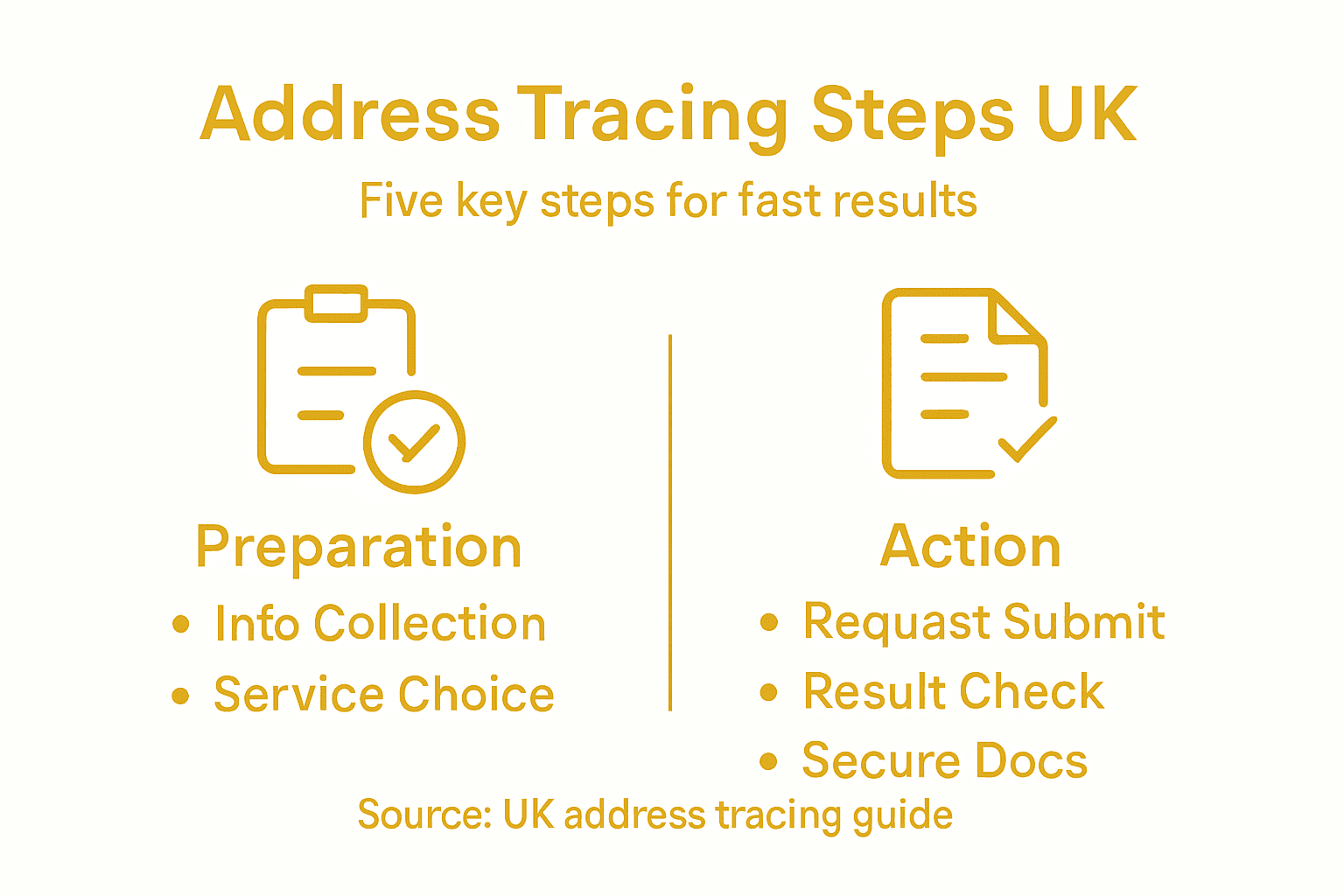
Here’s how the five steps of address tracing in the UK compare in purpose and outcome:
| Step | Main Objective | Key Outcome |
|---|---|---|
| Information Gathering | Build complete personal profile | Increases tracing accuracy |
| Service Selection | Choose reputable tracing provider | Ensures legal, secure search |
| Submit Request | Provide thorough submission | Enables effective investigation |
| Review Results | Confirm details and identity | Prevents errors and fraud |
| Safeguard Outcomes | Protect findings and privacy | Maintains data integrity |
Discover Reliable Solutions to Overcome Address Tracing Challenges in the UK
Locating someone quickly in the United Kingdom can be a complex process filled with challenges such as gathering accurate personal information and finding a trustworthy tracing service. If you are struggling with verifying identities or tracking down current addresses, UKtrace.co.uk offers specialized electronic tracing solutions tailored to your needs. Our services include comprehensive Name and address searches UK that combine advanced database access with strict data privacy to provide accurate and confidential results.
Take control of your search today by choosing a professional partner who understands the importance of detail and legal compliance. Whether you need to locate lost relatives, confirm contact details, or conduct identity verifications, visit UKtrace.co.uk now to get started. Explore the full range of services, including UK Land and property searches, and receive the support and accuracy you need to complete your address tracing effectively.
Frequently Asked Questions
How can I gather information to trace a person in the UK?
To trace a person in the UK, start by gathering essential information such as their full legal name, any known aliases, and the most recent address. Document details like physical descriptions, recent photographs, and connections with friends or family to create a comprehensive profile that aids the tracing process.
What should I look for when choosing an address tracing service?
When selecting an address tracing service, consider factors like compliance with data protection regulations, professional accreditation, and the service’s track record. Choose a provider with transparent pricing and security measures to ensure the privacy of both you and the individual being traced.
What information do I need to submit with my address tracing request?
To submit an address tracing request, include the full legal name of the person being traced, their last known address, and any identifying details such as date of birth. Also, provide your relationship to the individual and any supporting documentation that validates your connection to facilitate the tracing process.
How can I verify the results I receive from an address tracing service?
To verify the results from an address tracing service, cross-reference the provided information against official records and confirm the consistency of historical addresses. Check the credibility of the source and validate personal details to ensure you are researching accurate information.
What steps should I take to safeguard the tracing outcomes?
To safeguard tracing outcomes, create secure digital and physical records of all documents and communication related to the tracing process. Implement password protection and encryption for digital files, and redact sensitive personal information to maintain confidentiality throughout your investigation.