
Reaching out to reconnect with a lost family member or confirming the identity of someone new can quickly become a maze of questions and paperwork. The challenge is often knowing where to start and which details really matter when searching for a United Kingdom address. By focusing on gathering essential personal information and using reliable sources, you set yourself up for searches that are both accurate and respectful of privacy boundaries.
Table of Contents
- Step 1: Gather Essential Information For Address Tracing
- Step 2: Access UKtrace.co.uk And Select Suitable Search Tools
- Step 3: Enter And Search Address Details Electronically
- Step 4: Verify Address Accuracy And Occupant Identities
- Step 5: Record Findings And Maintain Confidentiality
Quick Summary
| Main Insight | Detailed Explanation |
|---|---|
| 1. Gather Essential Personal Information | Compile full name, previous addresses, and other identifiers to improve address tracing success chances. |
| 2. Utilize the Right Search Tools | Access UKtrace.co.uk and select tools that best match your specific address tracing needs legally and ethically. |
| 3. Ensure Accurate Data Entry | Enter known address details with precision, using platforms’ verification features to validate your information. |
| 4. Verify Information Thoroughly | Cross-check address details and occupant identities using reliable verification services and government records. |
| 5. Document Findings Securely | Maintain confidentiality by using secure storage and regularly auditing your records to protect personal data. |
Step 1: Gather essential information for address tracing
Tracking down a UK address requires strategic preparation and comprehensive information collection. Before launching your search, you will need to compile critical personal details that increase the likelihood of a successful trace.
Start by assembling all available personal identifiers for the individual you are searching for. This includes full legal name, any known previous addresses, approximate dates of residence, and additional identifying information such as birthdate or last known employment details. Public authorities maintain various records that can prove invaluable during your search. The more precise data you can gather, the higher your chances of locating the correct address.
When collecting information, focus on verifiable sources like old correspondence, family records, or professional documents. Pension records and employment histories can provide unexpected leads. Cross reference multiple sources to validate the information and ensure accuracy. Verify details like previous employer names, business types, and known residential changes that might help narrow down your search.
Pro tip: Create a dedicated folder or digital document to organize all gathered information systematically, which will streamline your address tracing process and prevent losing critical details.
Step 2: Access UKtrace.co.uk and select suitable search tools
Navigating the UKtrace.co.uk platform requires a strategic approach to finding the right search tools for your specific address tracing needs. Your goal is to locate precise search options that align with your investigation requirements while ensuring legal and ethical data retrieval.
Begin by exploring the website’s data protection guidelines to understand the legal framework surrounding personal address searches. Different search tools on the platform cater to various scenarios from genealogical research to professional background checks. Look for tools that offer comprehensive search capabilities such as reverse address lookup, name verification, and historical residence tracking. Pay close attention to the scope and limitations of each search option, ensuring you select a method that matches your specific information requirements.
When selecting your search tool, prioritize platforms that provide verified and current information. Comprehensive datasets can significantly enhance the accuracy of your search by cross referencing multiple information sources. Take time to review the details of each search option, understanding what specific information you will receive and how it can support your address tracing objective.
Pro tip: Create a clear list of the specific details you need before selecting a search tool, which will help you choose the most appropriate and cost effective option on UKtrace.co.uk.
Step 3: Enter and search address details electronically
Accurately entering address details electronically requires precision and attention to specific data entry requirements. Your goal is to navigate the digital search process efficiently while ensuring the information you input generates the most relevant results.
Start by preparing your known address information in a clear and organized manner. Land registry search processes typically require precise postcode entry and property identification details. When inputting information, double check each field for accuracy including street name, house number, postcode, and any additional identifiers. Most electronic search platforms offer autocomplete and verification features that can help validate your address information in real time.

Utilize the platform’s specific search tools by selecting the most appropriate search option for your investigation. Some platforms provide address lookup systems that allow you to confirm residential details through multiple verification methods. Pay close attention to the search parameters you can adjust such as date ranges, previous occupancy information, or specific address history options.
Pro tip: Keep digital copies of all search inputs and results for future reference, which can help track your investigation progress and provide a reliable documentation trail.
Step 4: Verify address accuracy and occupant identities
Confirming the accuracy of address details and verifying occupant identities requires a methodical approach to cross checking information from multiple reliable sources. Your primary objective is to validate the authenticity of address and personal information through official verification channels.
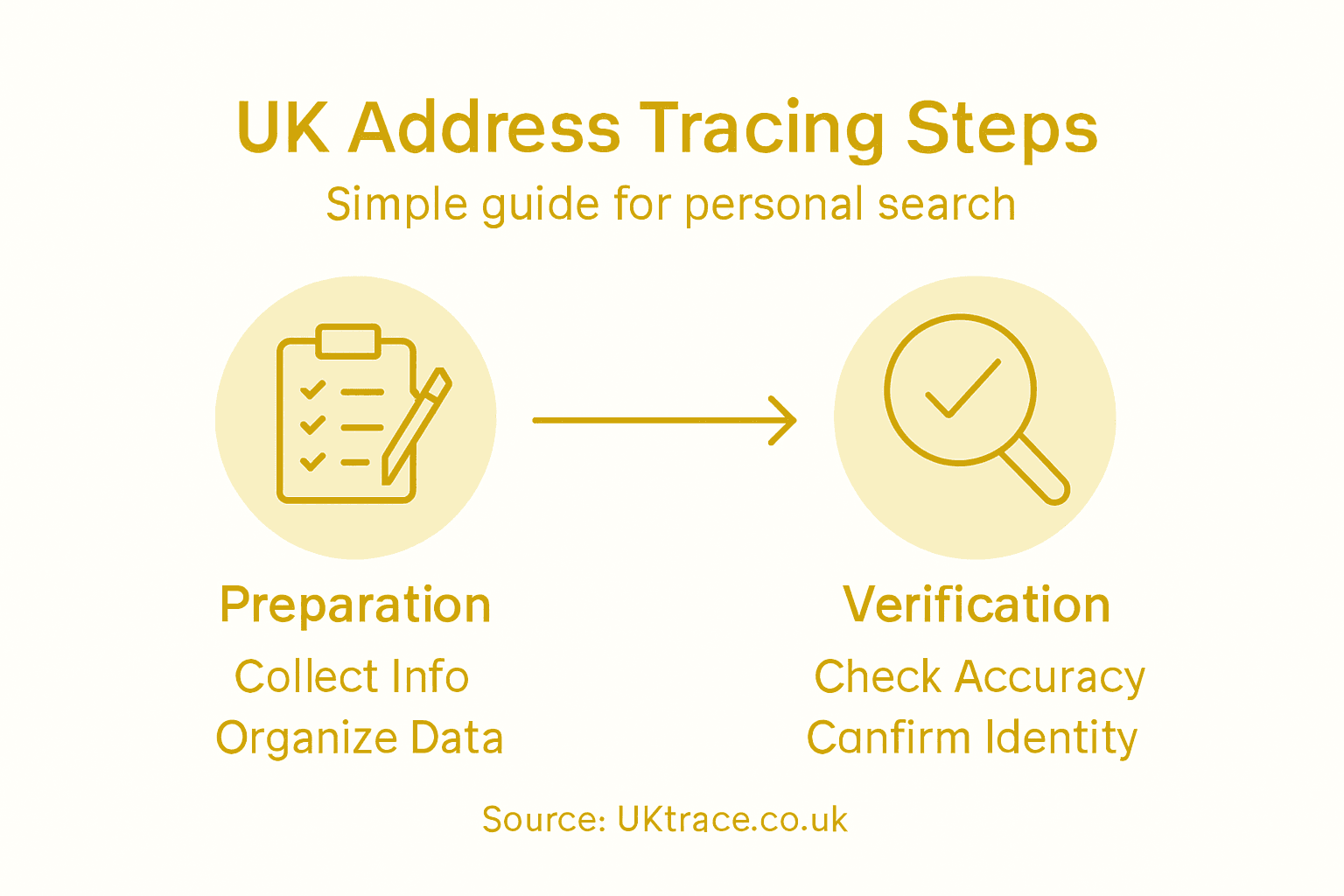
Begin by utilizing official identity verification services that provide robust authentication methods. These services typically require presenting official photo identification and answering specific security questions to confirm personal details. Look for verification platforms that offer comprehensive checks such as matching names with address records, confirming residential history, and cross referencing official government databases.
Expand your verification process by exploring additional authentication methods like electronic visa systems. Electronic verification tools can help confirm an individual’s right to reside at a specific address and provide transparent documentation of occupancy status. Compare information from multiple sources including electoral registers, utility bill records, and official government databases to build a comprehensive profile of address accuracy and occupant identities.
Pro tip: Create a systematic checklist of verification sources and documents to ensure you capture all necessary information during your address and identity confirmation process.
Here’s a quick comparison of key verification sources and the unique insights each can yield:
| Verification Source | Type of Information Provided | Best Used For |
|---|---|---|
| Official ID Verification | Government-issued identity match | Confirming legal identity |
| Electoral Register | Voter registration and address | Verifying residency history |
| Utility Bill Records | Occupant and address link | Supporting current occupation |
| Land Registry Database | Property ownership and changes | Validating address details |
| Employment History | Workplace and address linkage | Building movement timeline |
Step 5: Record findings and maintain confidentiality
Documenting address search results requires careful attention to legal and ethical standards that protect individual privacy and personal information. Your responsibility is to create a systematic and secure record of findings while maintaining strict confidentiality throughout the process.
Data protection protocols are critical when recording sensitive information. Begin by establishing a secure digital filing system with password protection and encryption. Anonymize personal identifiers wherever possible by using coded references instead of full names. Ensure that any recorded information is stored on encrypted devices or secure cloud storage platforms that meet General Data Protection Regulation standards.
Implement a comprehensive review process for your documentation. Confidential information management requires regular audits of your stored data. Create a systematic approach to reviewing and purging unnecessary information periodically. Restrict access to your findings by using multi factor authentication and limiting the number of individuals who can access the documentation.
Pro tip: Create a standardized documentation template with built in privacy safeguards to streamline your confidential record keeping process.
Below is a summary of data security strategies that help maintain privacy during address tracing:
| Security Measure | Purpose | Implementation Example |
|---|---|---|
| Encryption | Protects data from unauthorized access | Password-protected files |
| Anonymization | Removes personal identifiers | Coded references instead of names |
| Regular Data Audits | Ensures only vital data stored | Reviewing and deleting old records |
| Access Controls | Limits documentation visibility | Multi-factor authentication usage |
Unlock Accurate UK Address Searches with Expert Help
Tracing UK addresses for personal searches can feel overwhelming without the right tools or access to verified data sources. Common challenges include ensuring information accuracy, verifying occupant identities, and maintaining confidentiality throughout your investigation. You need reliable, up-to-date resources that simplify these complexities and deliver precise results for personal or professional purposes.
Explore how our Name and address searches UK solutions at UKtrace.co.uk provide comprehensive electronic tracing tailored to your needs.
Start your search with confidence knowing you will receive detailed occupant verification and historic address insights backed by robust data protection practices. Don’t let uncertainty slow you down when locating lost relatives, confirming identities, or conducting personal research. Visit UKtrace.co.uk today to access trusted tools designed for accuracy and privacy. Take the next step and secure your results now.
Frequently Asked Questions
What personal information do I need to trace an address in the UK?
To trace an address in the UK, gather essential personal details such as the individual’s full legal name, known previous addresses, approximate dates of residence, and identifying information like birthdate. Collect this information from verifiable sources to increase your trace success rate.
How do I choose the right search tool for tracing a UK address?
Select a search tool by first understanding your specific needs, whether genealogical research or a professional background check. Explore options available, focusing on tools that provide comprehensive search capabilities and verify the data’s reliability.
What steps should I follow to enter address details accurately?
Accurately enter address details by organizing known information clearly, including street name, house number, and postcode. Double-check each entered field for accuracy, utilizing any autocomplete features available in the search platform.
How can I verify the accuracy of an address I have traced?
Verify the accuracy of an address by using official identity verification services that confirm personal details through government databases. Cross-reference information from multiple sources, such as electoral registers and utility bill records, to create a more reliable profile.
What security measures should I take when recording findings from my address search?
Implement security measures such as using encryption for digital files and anonymizing personal identifiers to protect confidentiality. Regularly review and audit stored data to ensure compliance with data protection protocols and restrict access to those who need it.