
Locating lost relatives or confirming someone’s identity in the United Kingdom often means navigating more than simple postal records. Every search involves connecting people to places with absolute accuracy, relying on systems like Ordnance Survey AddressBase and the use of unique property reference numbers. For anyone tracing ancestry or verifying residential history, precise location identification becomes essential, offering clarity in a world where addresses and personal details must align across official records and digital tracing tools.
Table of Contents
- What Tracing Addresses Really Means
- Key Types of UK Address Searches
- How Electronic Tracing Solutions Work
- Legal Boundaries and Privacy Principles
- Avoiding Common Mistakes and Pitfalls
Key Takeaways
| Point | Details |
|---|---|
| Address Tracing Complexity | Address tracing involves comprehensive processes for identifying and verifying locations, crucial for research, healthcare, and legal documentation. |
| Types of Address Searches | Various search methods exist in the UK, including property lookups and occupancy verification, supporting diverse sectors like emergency services and local government. |
| Electronic Tracing Solutions | Modern tracing uses advanced technology and data aggregation for accurate location identification while upholding privacy standards. |
| Legal and Ethical Safeguards | Address tracing must comply with GDPR principles, emphasizing informed consent, data minimization, and confidentiality to protect individual privacy. |
What Tracing Addresses Really Means
Tracing addresses goes far beyond simple postal navigation. At its core, address tracing represents a sophisticated process of precisely identifying and verifying physical locations using standardized datasets and unique geographical identifiers. In the United Kingdom, this practice involves meticulously mapping property details through authoritative systems like Ordnance Survey AddressBase, which assigns unique property reference numbers (UPRNs) to every addressable location.
The significance of address tracing extends well beyond mail delivery. Precise location identification serves critical functions across multiple domains:
- Research and academic studies
- Healthcare service planning
- Legal and administrative documentation
- Emergency service response coordination
- Property management and verification
Understanding address tracing requires recognizing its technical complexity. Every traceable address contains multiple layers of information - from postal routing codes to geographic coordinates. UK government address databases aggregate data from local authorities and Royal Mail, creating comprehensive records that enable accurate property and individual location tracking.
The process isn’t just about finding where someone lives; it’s about creating reliable, verifiable connections between physical spaces and the individuals or entities associated with them. Unique identifiers like UPRNs ensure that each location can be precisely referenced across different administrative and research systems, reducing errors and improving data integrity.
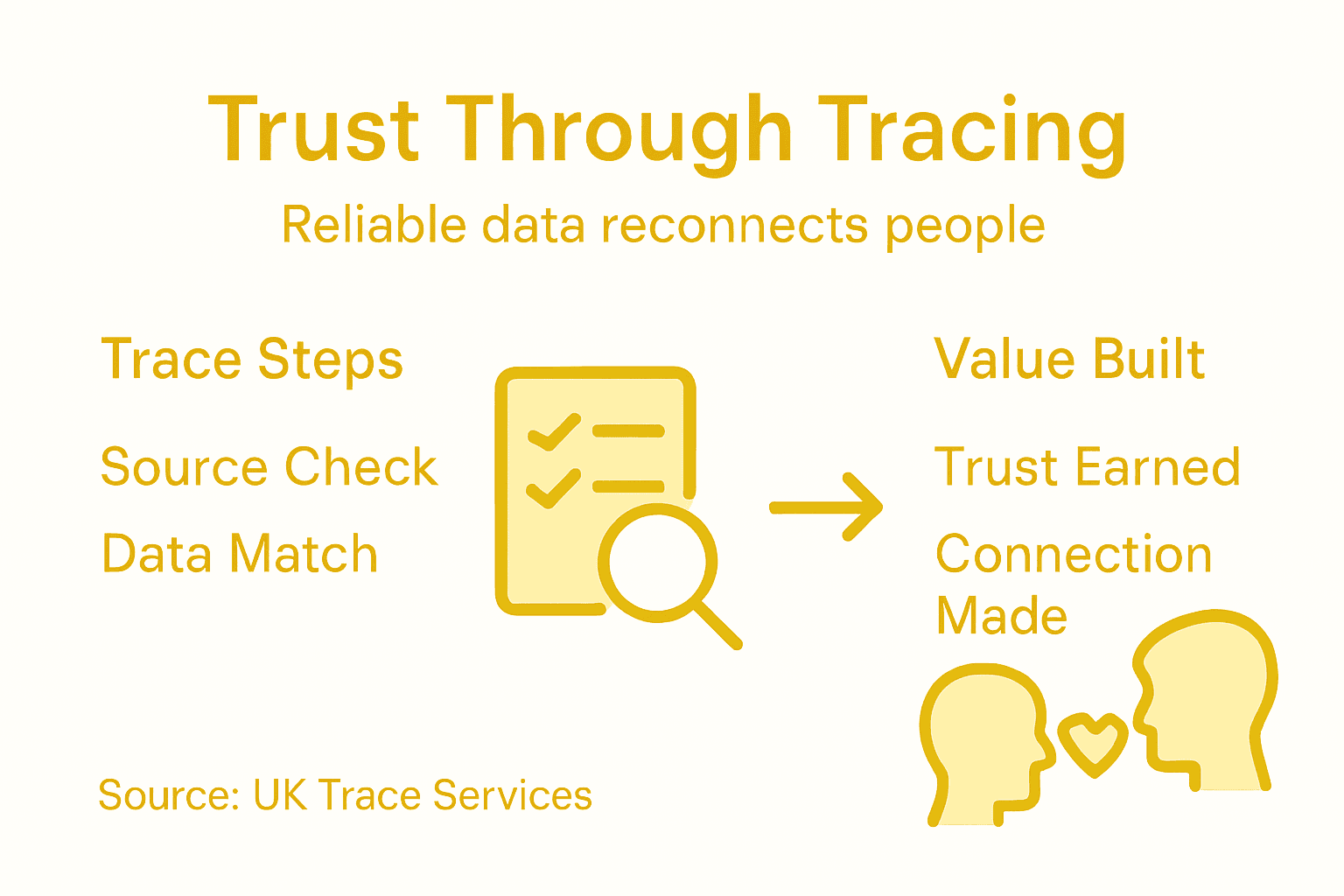
Pro tip: When conducting address traces, always verify multiple authoritative sources to ensure the most current and accurate information.
Key Types of UK Address Searches
Address searches in the United Kingdom encompass a diverse range of techniques designed to locate, verify, and extract detailed information about specific properties. Government address databases provide multiple search methodologies that serve different investigative needs, from basic property identification to comprehensive location tracking.
Key Address Search Categories include:
- Property Address Lookup: Basic identification of property location using postal address
- Unique Property Reference Number (UPRN) Search: Precise location identification using official government identifiers
- Historical Address Tracking: Investigating previous occupants and property history
- Residential Occupancy Verification: Confirming current and past residents
- Commercial Property Identification: Locating business addresses and ownership details
The National Address Gazetteer serves as the foundational resource for most address searches, offering a comprehensive database that supports various professional and personal investigation requirements. These searches are crucial for multiple sectors, including emergency services, local government, healthcare planning, and individual research purposes.
Each address search type employs sophisticated data aggregation techniques, pulling information from local authorities, Royal Mail databases, and other authoritative sources. The goal is not just to find an address, but to provide a holistic view of the property, its historical context, and current status.

Here is a summary of how different UK address search types serve various sectors:
| Address Search Type | Primary Usage | Who Benefits |
|---|---|---|
| Property Address Lookup | Locating property for basic reference | Home buyers, public |
| UPRN (Unique Property) Search | Exact location verification | Local authorities, surveyors |
| Historical Address Tracking | Researching past occupancy | Academics, legal teams |
| Residential Occupancy Verification | Validating current or prior residents | Landlords, investigators |
| Commercial Property Identification | Linking businesses to locations | Companies, government |
Pro tip: Always cross-reference multiple data sources when conducting address searches to ensure maximum accuracy and comprehensive information.
How Electronic Tracing Solutions Work
Electronic tracing solutions represent a sophisticated technological approach to locating and verifying information about individuals and properties using advanced digital methodologies. Digital contact tracing technologies demonstrate how modern systems can efficiently collect and process proximity data while maintaining robust privacy protections.
Core Components of Electronic Tracing Solutions include:
- Data Collection Mechanisms: Gathering information from multiple digital sources
- Privacy-Preserving Encryption: Protecting personal identifiers during searches
- Cross-Referencing Databases: Verifying information across multiple authoritative sources
- Real-Time Location Tracking: Identifying current and historical address associations
- Anonymized Identifier Systems: Ensuring user privacy during investigations
These electronic systems leverage sophisticated algorithms to connect disparate pieces of information, creating comprehensive profiles that can reveal complex relationship networks and residential histories. By integrating data from mobile devices, government records, postal databases, and other authoritative sources, tracing solutions can provide unprecedented accuracy in personal and property investigations.
The technological infrastructure behind electronic tracing goes beyond simple database searches. Modern solutions employ advanced machine learning techniques to validate and cross-reference information, ensuring that each trace delivers reliable and contextually rich results about individuals or properties.
Pro tip: Always review and understand the privacy policies of electronic tracing services to ensure your personal information remains protected during investigations.
Legal Boundaries and Privacy Principles
Address tracing technologies operate within a complex legal landscape that prioritizes individual privacy while enabling legitimate information gathering. Privacy principles in research contexts establish critical boundaries that balance public interests with personal data protection.
Key Legal Safeguards for Address Tracing include:
- Informed Consent: Requiring explicit permission before data collection
- Data Minimization: Collecting only essential information
- Purpose Limitation: Using data strictly for intended investigative purposes
- Confidentiality Protections: Securing personal identifiers
- Right to Erasure: Allowing individuals to request data removal
The General Data Protection Regulation (GDPR) represents a comprehensive framework that governs how personal information can be processed, mandating strict protocols for data handling. These regulations require organizations to implement robust security measures, ensuring that any address tracing activities respect individual privacy rights and maintain transparent communication about data usage.
Complex legal requirements demand that electronic tracing solutions integrate multiple layers of protection. This means implementing advanced encryption technologies, maintaining detailed audit trails, and providing clear mechanisms for individuals to understand and control how their personal information is accessed and utilized.
The following table compares core privacy safeguards required for address tracing under GDPR:
| Legal Safeguard | What It Entails | Importance for Users |
|---|---|---|
| Informed Consent | Explicit permission for data use | User control over info |
| Data Minimization | Only necessary data collected | Reduces exposure risk |
| Purpose Limitation | Data used for stated reason only | Prevents misuse |
| Right to Erasure | Request deletion of personal data | Keeps data lifecycle clear |
Pro tip: Always request and review the privacy policy of any address tracing service to understand exactly how your personal information will be protected and used.
Avoiding Common Mistakes and Pitfalls
Address tracing requires precision and careful methodology to ensure accurate and legally compliant results. Researchers must systematically avoid common research mistakes by implementing rigorous verification processes and maintaining high ethical standards.
Critical Pitfalls to Avoid in Address Tracing:
- Inadequate Data Verification: Relying on single-source information
- Outdated Source Materials: Using obsolete or unverified databases
- Privacy Compliance Failures: Neglecting legal data protection requirements
- Incomplete Documentation: Failing to maintain comprehensive research records
- Bias in Data Collection: Introducing unintentional investigative prejudices
Successful address tracing demands a methodical approach that prioritizes data integrity and comprehensive cross-referencing. Investigators must develop a systematic process that combines multiple authoritative sources, ensuring each piece of information is thoroughly validated before being incorporated into final findings.
Technological limitations and human error can significantly compromise address tracing outcomes. Professionals must remain vigilant, continuously updating their methodologies, staying current with legal requirements, and implementing robust verification protocols that minimize potential inaccuracies and protect individual privacy rights.
Pro tip: Always maintain a detailed audit trail of your research process, documenting each source and verification step to ensure transparency and credibility.
Unlock Trust and Connection with Precise Address Tracing
Finding and verifying accurate address information is essential for rebuilding trust and reconnecting with people in meaningful ways. Whether you are conducting personal investigations, ancestry research, or need to confirm identities and residency, the challenge is ensuring data accuracy, privacy compliance, and access to reliable sources like Unique Property Reference Numbers and up-to-date occupant details. Address tracing is more than just a simple lookup — it requires sophisticated tools to cross-reference and verify authoritative records.
Discover how UK Trace specializes in delivering these precise address and name searches within the United Kingdom. Our services empower you to uncover current and past occupants confidently, access comprehensive property histories, and validate personal identities, all while maintaining strict confidentiality and accuracy.
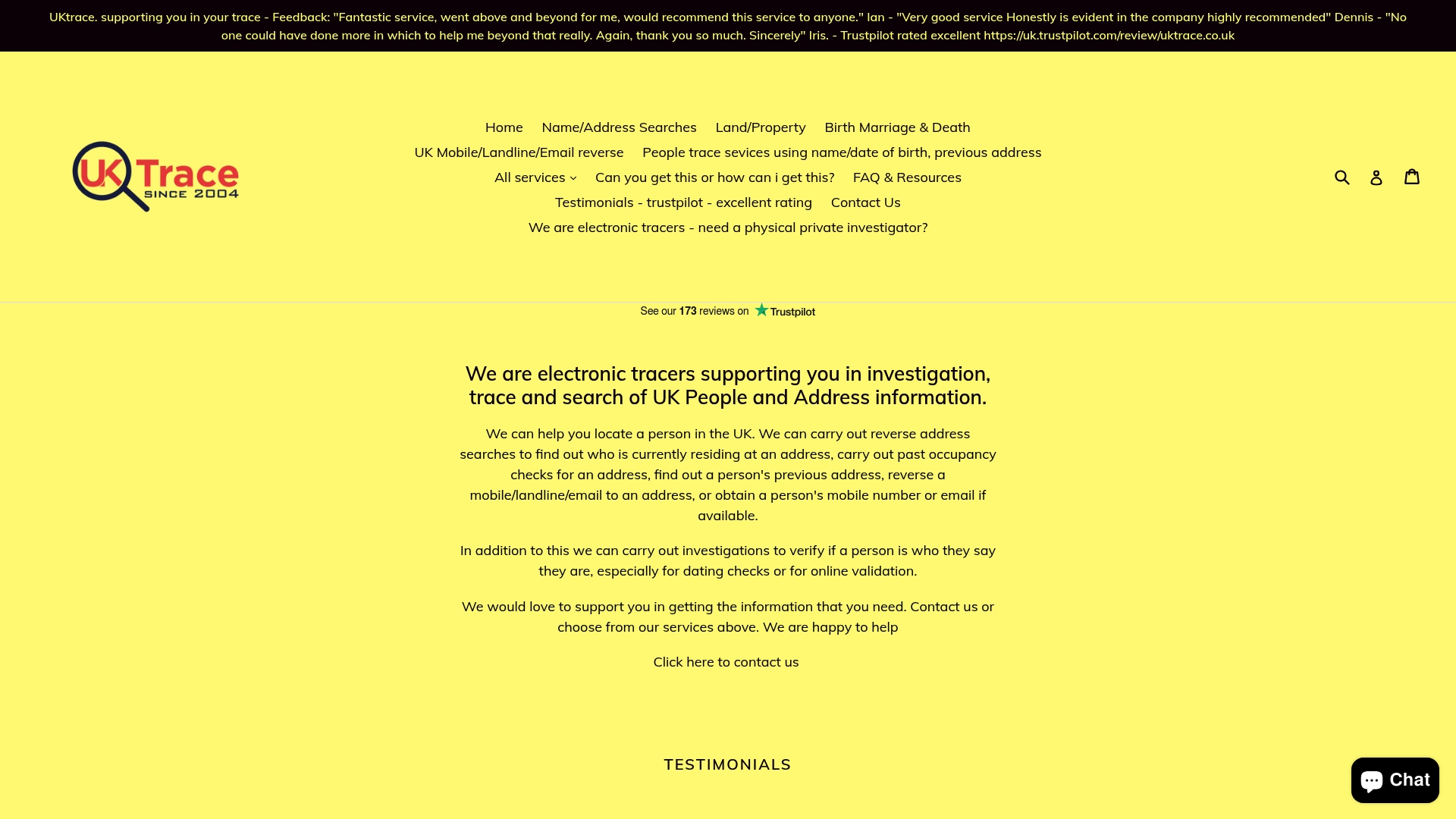
Take control of your search today with our trusted Name and Address Searches UK solutions. Start your journey toward accurate reconnection and verification now by visiting https://uktrace.co.uk. Your path to reliable investigative information is just a click away.
Frequently Asked Questions
What is address tracing and why is it important?
Address tracing is the process of identifying and verifying physical locations using standardized datasets. It is important because it enhances data integrity and precision across various fields such as healthcare, legal documentation, and emergency services.
How do unique property reference numbers (UPRNs) assist in address tracing?
UPRNs are unique identifiers assigned to every addressable location, allowing for precise location identification and improved data accuracy in administrative and research contexts.
What are the key types of address searches that can be conducted?
Key types of address searches include property address lookup, UPRN search, historical address tracking, residential occupancy verification, and commercial property identification, each serving different investigative needs.
What are some common challenges in address tracing?
Common challenges include inadequate data verification, reliance on outdated sources, failing to comply with privacy regulations, and potential bias in data collection processes.