
Reconnecting with lost family members or uncovering hidden parts of your ancestry often begins with a single clue: a name, an address, or a scrap of family history scribbled on an old envelope. For UK residents, tracing loved ones or authenticating personal details demands both dedication and the right approach. By focusing on accurate information collection, you set a strong foundation for a search that is not only thorough but also respectful of privacy and sensitive data.
Table of Contents
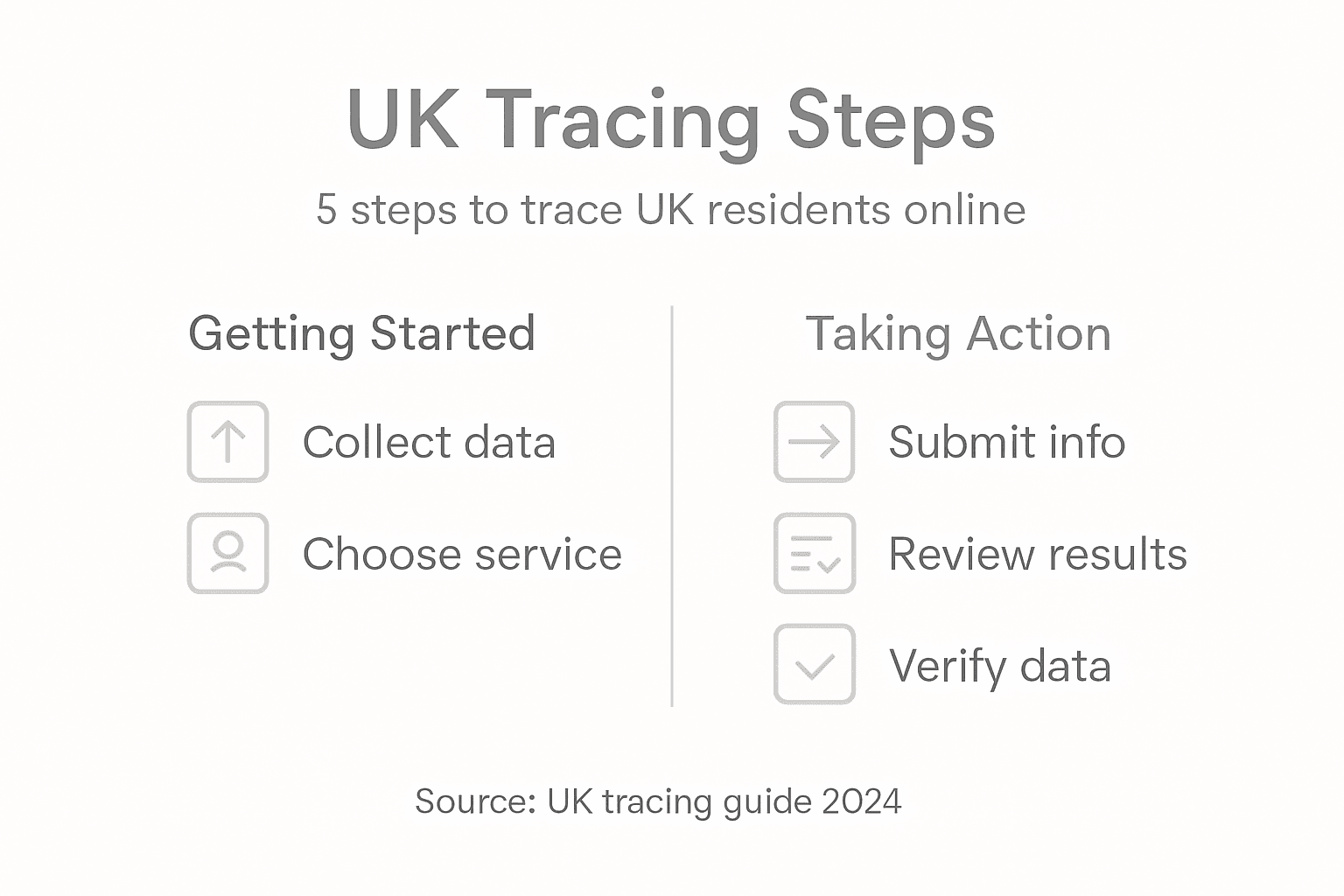
- Step 1: Gather Essential Information for Tracing
- Step 2: Select the Right Online Tracing Service
- Step 3: Input and Submit Search Data Securely
- Step 4: Review and Interpret Tracing Results
- Step 5: Verify and Validate Contact Information
Quick Summary
| Key Insight | Explanation |
|---|---|
| 1. Compile Key Personal Identifiers | Gather full legal name, last address, and date of birth to enhance search accuracy. |
| 2. Evaluate Online Tracing Services | Choose services based on accuracy, privacy, and coverage to ensure successful outcomes. |
| 3. Ensure Secure Data Submission | Submit your information safely, using secure connections and strong passwords. |
| 4. Analyse Tracing Results Carefully | Cross-reference data and verify its currency to determine relevance and accuracy. |
| 5. Conduct Thorough Verification Checks | Validate contact information through multiple methods to confirm accuracy and reliability. |
Step 1: Gather Essential Information for Tracing
Tracing UK residents requires strategic information collection that provides accurate and comprehensive data about the individual you are searching for. This section will walk you through the systematic process of collecting preliminary details that enhance your search effectiveness.
Starting your trace involves compiling key personal identifiers. You will want to gather information such as full legal name, last known address, date of birth, and any additional distinguishing details. These core pieces help narrow down potential matches and increase precision. When conducting address searches, consider collecting these specific data points:
- Full legal name (current and previous names)
- Last confirmed residential address
- Approximate age or date of birth
- Potential family member names
- Professional or employment history
- Known geographical regions of residence
Verification becomes critical during this stage. Cross-reference any information you have through multiple sources to ensure accuracy. Public records, electoral registers, and professional directories can provide supplementary details that strengthen your trace.
Accurate preliminary information significantly increases the likelihood of a successful trace.
Pro tip: Document every piece of information meticulously, creating a structured profile that will serve as the foundation for your subsequent search efforts.
Step 2: Select the Right Online Tracing Service
Choosing an appropriate online tracing service can significantly impact the success of your search for UK residents. This critical step involves evaluating various providers to ensure you select a service that meets your specific investigative needs and provides reliable, accurate results.
When exploring tracing services UK, consider the following key factors in your selection process:
- Accuracy of search results
- Coverage of UK residential databases
- Data protection and privacy standards
- Cost-effectiveness of the service
- Breadth of search capabilities
- Customer support and verification options
Professional tracing services differ substantially in their approach and capabilities. Some specialise in specific types of traces, such as finding long-lost relatives or conducting professional background checks. Ensure the service you choose aligns precisely with your specific requirements.

Here’s a summary of key UK tracing service features and their potential business impact:
| Service Feature | Impact on Success Rate | Privacy Benefits | Typical User Scenario |
|---|---|---|---|
| Database Breadth | Higher match accuracy | Data stays localised | Finding lost family members |
| Verification Options | Reduces false positives | Mitigates information leaks | Professional background checks |
| Customer Support | Improves result clarity | Assists with secure handling | Tracing for legal requirements |
| Search Methodology | Tailors outcome quality | Demonstrates transparency | Locating former colleagues |
Professional tracing services offer targeted solutions that can dramatically improve your search outcomes.
Pro tip: Always request a sample report or consultation before committing to a tracing service to understand their methodology and potential success rate.
Step 3: Input and Submit Search Data Securely
Secure data submission is a critical stage in your online tracing process, requiring careful attention to detail and strict privacy considerations. This step involves entering your carefully gathered information into the chosen tracing service’s platform while maintaining the highest standards of data protection.
When addressing tracing process details, follow these essential guidelines for secure data input:
- Double-check all personal information before submission
- Use secure, private internet connections
- Verify the website’s security certificate
- Avoid public Wi-Fi networks during submission
- Create strong, unique passwords for your account
- Limit the personal information you share
Each tracing service will have a slightly different interface, but the core principles remain consistent. Protect your data at every stage by being meticulous about what you share and how you share it. Ensure you are using a reputable service with robust data encryption protocols.
Personal information security is paramount during online searches.
Pro tip: Consider using a dedicated email address for your tracing searches to maintain an additional layer of personal privacy and data separation.
Step 4: Review and Interpret Tracing Results
Analysing the results of your online tracing search requires careful attention and a systematic approach to understanding the information provided. Your goal is to verify the accuracy and relevance of the data retrieved about the UK resident you are searching for.
When defining tracing service outcomes, pay close attention to these critical interpretation aspects:
- Cross-reference multiple information sources
- Verify the currency of the retrieved data
- Check for potential discrepancies
- Assess the comprehensiveness of results
- Confirm the legal and ethical compliance of information
- Evaluate the reliability of the tracing service’s data
The search results may present various levels of detail, from basic contact information to more comprehensive personal records. Maintain a critical perspective and understand that not all retrieved information will be completely up to date or entirely accurate. Some results might require additional verification or further investigation.
Interpreting tracing results demands a methodical and discerning approach.
Pro tip: Create a structured spreadsheet to compare and analyse different pieces of information, helping you identify patterns and potential inconsistencies in the search results.
Step 5: Verify and Validate Contact Information
Contact information validation is a crucial final step in your tracing process, ensuring the accuracy and reliability of the details you have discovered. This stage requires meticulous attention to detail and a strategic approach to confirming the authenticity of the contact data.
When tracing UK services details, follow these comprehensive verification strategies:
- Conduct multiple verification checks
- Utilise official public records
- Request additional documentation
- Check electoral register listings
- Confirm address through independent sources
- Validate phone numbers through reverse lookup
Careful verification helps prevent potential errors and ensures you have the most current and accurate contact information. Approach each piece of data critically, understanding that initial search results might contain outdated or incomplete information. Some details may require additional cross-referencing or direct communication to confirm their validity.
Compare common methods for validating contact information after tracing:
| Validation Method | Benefit | Limitation | When to Use |
|---|---|---|---|
| Public Record Checks | Confirms legal accuracy | May be outdated | Official address confirmation |
| Reverse Phone Lookup | Verifies recent ownership | Limited coverage | Checking contact numbers |
| Electoral Register Review | Provides residency status | Excludes some individuals | Confirming address histories |
| Independent Source Contact | Ensures real-time data | May require permissions | Confirming current residence |
Thorough validation protects against potential misinformation and ensures reliable results.
Pro tip: Consider using multiple verification methods and document your validation process, creating a systematic approach that increases the reliability of your traced contact information.
Unlock Precise Results with Expert UK Resident Tracing Solutions
Finding the right individual in the UK can be challenging without accurate tools and verified data. This guide highlights the critical steps like gathering essential information and securely submitting search data to ensure trustworthy tracing outcomes. If you are aiming to overcome difficulties in verifying identities or locating current addresses with confidence UKtrace.co.uk offers tailored services that align perfectly with your investigative needs.
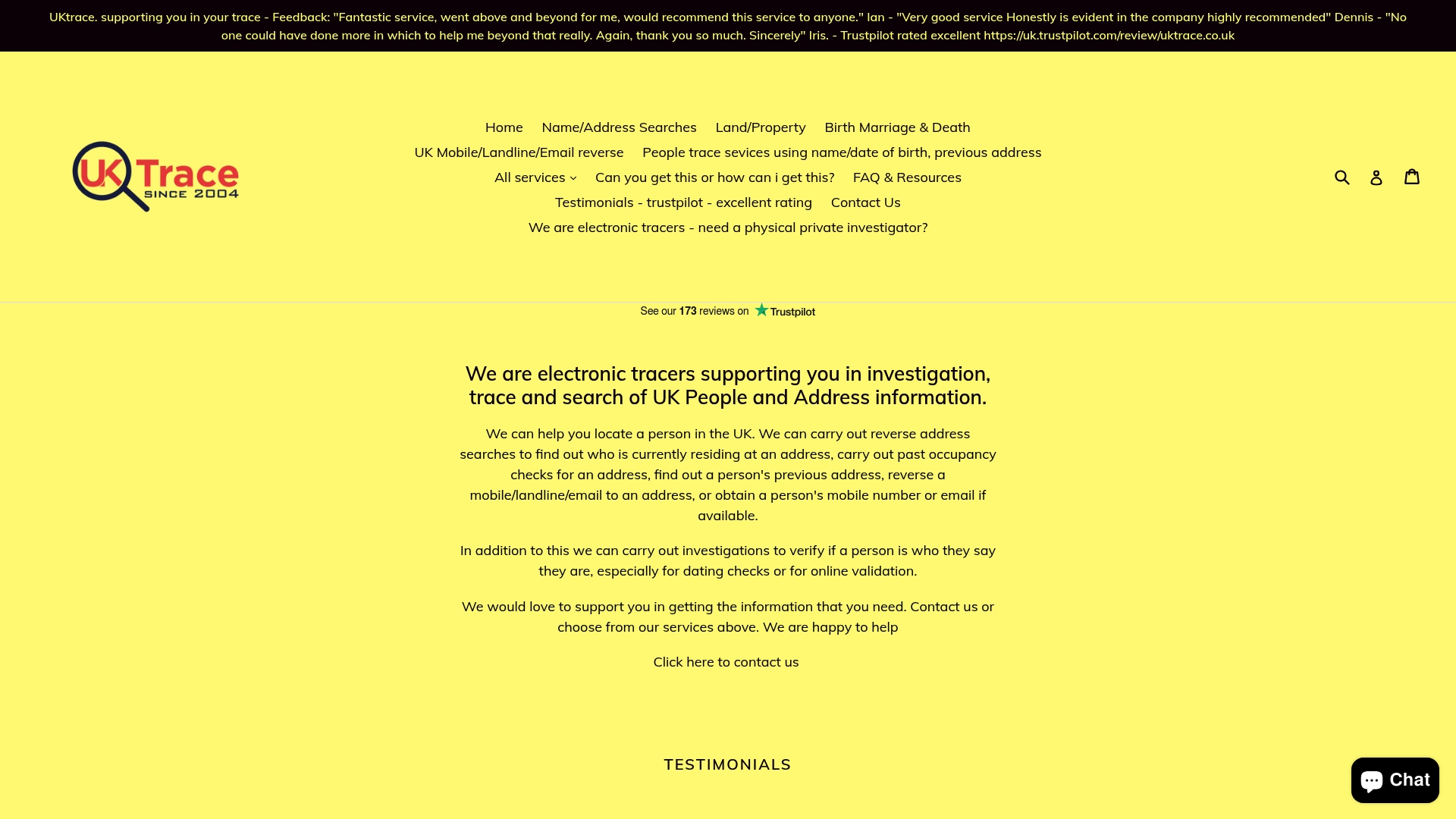
Start your search with our comprehensive Name and address searches UK to access accurate residency details. For deeper personal history needs explore our Birth, Marriage and Death searches. Trust our professional approach that prioritises confidentiality and data accuracy. Visit UKtrace.co.uk today and take the first step to reliable contact verification and peace of mind.
Frequently Asked Questions
What information do I need to gather for tracing a UK resident?
To trace a UK resident effectively, you should collect their full legal name, last known address, date of birth, and any other relevant details such as family member names or past employment history. Document this information to help narrow down your search results and increase accuracy.
How do I choose the right online tracing service for my needs?
Select an online tracing service by evaluating the accuracy of their search results, their database coverage, and their data protection standards. Consider requesting a sample report to understand their methodology and ensure it aligns with your specific requirements.
How should I securely submit my search data to a tracing service?
When submitting your search data, double-check all personal information and use a secure internet connection. Make sure the website is secure and avoid public Wi-Fi networks to protect the sensitive information you are sharing.
What should I do if the tracing results contain inconsistencies?
If you find inconsistencies in the tracing results, cross-reference the information with multiple sources and verify its currency. Consistently check for discrepancies and conduct additional searches if necessary to confirm the accuracy of the data obtained.
How can I verify and validate the contact information I receive?
Validate the contact information by conducting multiple verification checks, such as using public records or reverse phone lookups. Cross-reference the retrieved data to confirm its authenticity and maintain a critical perspective on any potential errors or outdated information.