
Trying to track down a lost family member or confirm a client’s address in the United Kingdom can quickly become frustrating when old records, false leads, or gaps in public data get in the way. Whether you are conducting ancestry research or need reliable verification for your business, legal compliance and data protection matter just as much as accuracy. This guide explains how reputable tracing services offer robust solutions while helping you avoid hidden risks and unnecessary costs.
Table of Contents
- What Are UK Tracing Services and Why They Matter
- Key Types of UK Tracing Solutions Explained
- How Electronic People Tracing Works in Practice
- Legal Standards Governing UK Tracing Services
- Risks, Costs, and Limitations to Consider
Key Takeaways
| Point | Details |
|---|---|
| UK Tracing Services | Specialized tools for locating individuals and verifying personal information in the UK, essential for both personal and business purposes. |
| Legal Compliance | Tracing services must adhere to strict legal standards, including the Data Protection Act and GDPR, ensuring privacy and data protection. |
| Cost Considerations | Tracing service costs vary based on complexity; potential clients should clarify pricing structures and possible additional fees before engagement. |
| Data Verification | Effective tracing requires robust verification processes to ensure accuracy, highlighting the importance of service professionalism and methodology. |
What Are UK Tracing Services and Why They Matter
UK tracing services are specialized investigative tools designed to locate and verify personal information about individuals within the United Kingdom. These services help people and businesses uncover critical details through comprehensive electronic searches, enabling precise address tracking and personal identification.
These services are essential for various scenarios, including:
- Locating lost relatives or friends
- Verifying potential business partners
- Conducting ancestry research
- Legal and professional background checks
- Confirming current residential addresses
Electronic tracing provides a structured approach to gathering information, utilizing advanced databases and cross-referencing techniques. UK tracing professionals can quickly retrieve details that might otherwise remain hidden through traditional search methods.
The primary value of UK tracing services lies in their ability to provide accurate, legally compliant information. Unlike informal internet searches, these professional services maintain rigorous standards of data collection and verification. They access multiple authoritative sources, ensuring the information’s reliability and authenticity.
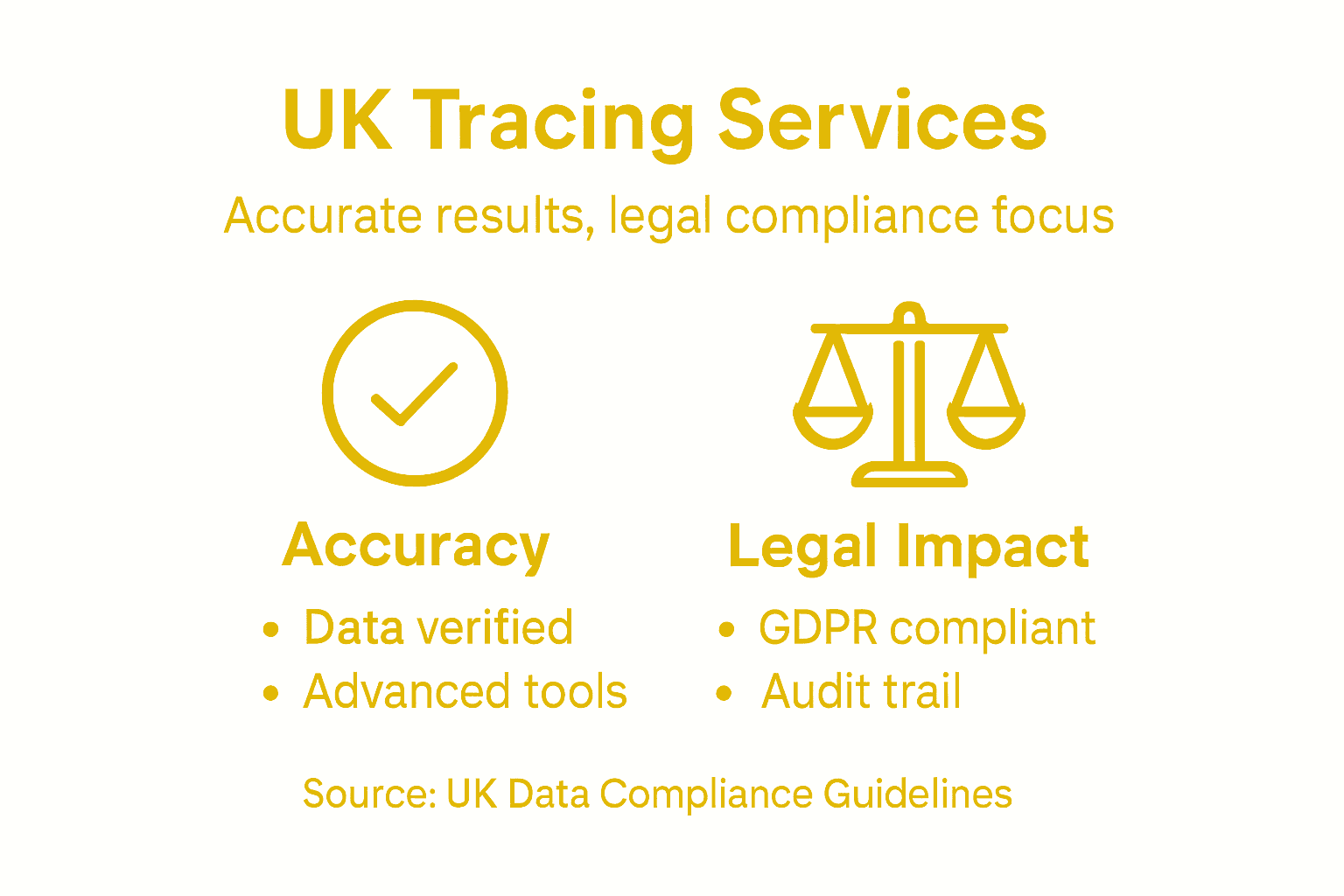
Pro tip: Always verify the legal compliance and data protection standards of any tracing service before initiating a search.
Key Types of UK Tracing Solutions Explained
UK tracing services offer multiple specialized solutions designed to meet diverse investigative needs. Tracing professionals have developed comprehensive approaches to help individuals and businesses uncover critical information quickly and efficiently.
The primary types of UK tracing solutions include:
- Address Tracing: Identifying current and historical residential locations
- Person Location: Finding individuals through multiple data sources
- Asset Verification: Confirming property and ownership details
- Background Checks: Comprehensive personal and professional history searches
- Contact Information Retrieval: Locating current phone numbers and email addresses
Each tracing solution operates through sophisticated electronic search methodologies. These techniques involve cross-referencing multiple authoritative databases, including electoral rolls, utility records, credit histories, and public registration documents. The goal is to provide accurate, legally compliant information that meets strict data protection standards.
Specialized tracing services go beyond simple internet searches by utilizing advanced algorithmic techniques and professional investigative networks. They can uncover connections and details that would remain hidden through conventional research methods, providing clients with comprehensive and reliable information.
Here’s a quick overview of how various UK tracing solutions deliver practical benefits:
| Solution Type | Typical Use Case | Main Data Sources | Business Impact |
|---|---|---|---|
| Address Tracing | Locating current occupants | Electoral rolls, utilities | Improves contact accuracy |
| Person Location | Finding missing individuals | Credit records, registrations | Enhances investigation speed |
| Asset Verification | Checking property ownership | Land registry, financial data | Reduces financial risk |
| Background Checks | Screening potential employees | Public records, professional history | Lowers hiring liability |
| Contact Info Retrieval | Updating phone/email details | Telecom and online databases | Improves communication |
Pro tip: Always request a detailed methodology explanation from your tracing service to understand their research approach and data verification processes.
How Electronic People Tracing Works in Practice
Electronic people tracing leverages sophisticated digital technologies to connect fragmented personal information across multiple databases. Tracing professionals utilize advanced algorithms and comprehensive data aggregation techniques to reconstruct individual profiles with remarkable precision.
The electronic tracing process typically involves several key stages:
- Data Collection: Gathering information from multiple authoritative sources
- Cross-Referencing: Matching details across different databases
- Verification: Confirming the accuracy of collected information
- Analysis: Identifying potential connections and patterns
- Reporting: Generating comprehensive search results
Digital investigation techniques employ complex matching algorithms that can connect seemingly unrelated data points. These systems analyze information from sources like electoral registers, utility accounts, credit histories, and public records. The technological infrastructure allows for rapid processing of vast amounts of data, enabling investigators to uncover connections that would be impossible through manual research.

Modern tracing services go beyond simple database searches. They integrate machine learning and artificial intelligence to improve matching accuracy, continuously refining their search capabilities. This approach ensures that clients receive the most up-to-date and reliable information possible, while maintaining strict adherence to data protection regulations.
Pro tip: Request a sample report to understand the depth and accuracy of an electronic tracing service before making a final selection.
Legal Standards Governing UK Tracing Services
UK tracing services operate within a complex legal framework designed to protect individual privacy while enabling legitimate information gathering. Tracing professionals must navigate stringent regulations that balance investigative needs with personal data protection.
The primary legal standards governing tracing services include:
- Data Protection Act 2018: Establishes core principles for personal data handling
- General Data Protection Regulation (GDPR): Ensures strict consent and privacy protocols
- Information Commissioner’s Office (ICO) Guidelines: Provides specific regulatory oversight
- Human Rights Act 1998: Protects individual privacy rights
- Computer Misuse Act 1990: Prevents unauthorized data access
Regulatory compliance requires tracing services to meet several critical legal requirements. These include obtaining explicit consent, maintaining data accuracy, limiting information usage to specified purposes, and implementing robust security measures to prevent unauthorized data disclosure. Investigators must demonstrate a legitimate legal basis for conducting searches, which typically involves proving a specific and lawful purpose for obtaining personal information.
The legal landscape surrounding electronic tracing is continuously evolving, with increasing emphasis on protecting individual privacy rights. Tracing services must implement sophisticated data protection mechanisms, including secure encryption, limited data retention periods, and comprehensive audit trails. Failure to comply with these standards can result in significant financial penalties and potential legal action.
Pro tip: Always request documentation confirming a tracing service’s legal compliance and data protection certifications before engaging their services.
Risks, Costs, and Limitations to Consider
Tracing services involve complex challenges that potential clients must carefully evaluate. Tracing service limitations can significantly impact the effectiveness and reliability of investigative searches.
Key risks and potential limitations include:
- Information Incompleteness: Gaps in public records
- False Positive Matches: Potential incorrect identification
- Data Protection Restrictions: Legal constraints on information access
- Cost Escalation: Increased expenses for complex searches
- Time-Consuming Verification: Manual checks extending investigation timelines
Cost structures for tracing services vary widely depending on the complexity of the search and depth of information required. Basic searches might start at modest rates, while comprehensive investigations involving multiple verification steps can become substantially more expensive. Clients should anticipate potential additional charges for advanced research techniques, such as manual record cross-referencing or specialized database access.
The effectiveness of tracing services depends on multiple factors, including the quality of available data, the specific investigative requirements, and the sophistication of the service’s research methodologies. Some searches may encounter significant obstacles, such as intentionally concealed information, outdated records, or jurisdictional limitations that can prevent successful location of the desired individual or information.
To help visualize the primary risks and costs, here’s a summary table:
| Challenge | Potential Effect | Mitigation Strategy |
|---|---|---|
| Data gaps | Incomplete search results | Use multiple sources |
| False positives | Mistaken identity | Enhanced verification process |
| Legal restrictions | Limited data access | Confirm compliance early |
| Cost escalation | Unexpected added fees | Request itemized pricing |
| Outdated records | Reduced accuracy | Prioritize recent data |
Pro tip: Request a detailed breakdown of potential additional costs and success probability before committing to a comprehensive tracing service.
Discover Precise UK Tracing Solutions to Overcome Investigative Challenges
The article highlights the critical need for accuracy and strict legal compliance when conducting UK tracing services. Many face challenges like incomplete data, legal restrictions, and the risk of false matches when trying to locate individuals or verify identities. At UKtrace.co.uk, we understand these pain points and provide specialized electronic solutions designed to deliver reliable and confidential results. Whether you need name and address verification or detailed personal information retrieval, our services use advanced data cross-referencing to ensure accuracy and compliance with UK data protection laws.
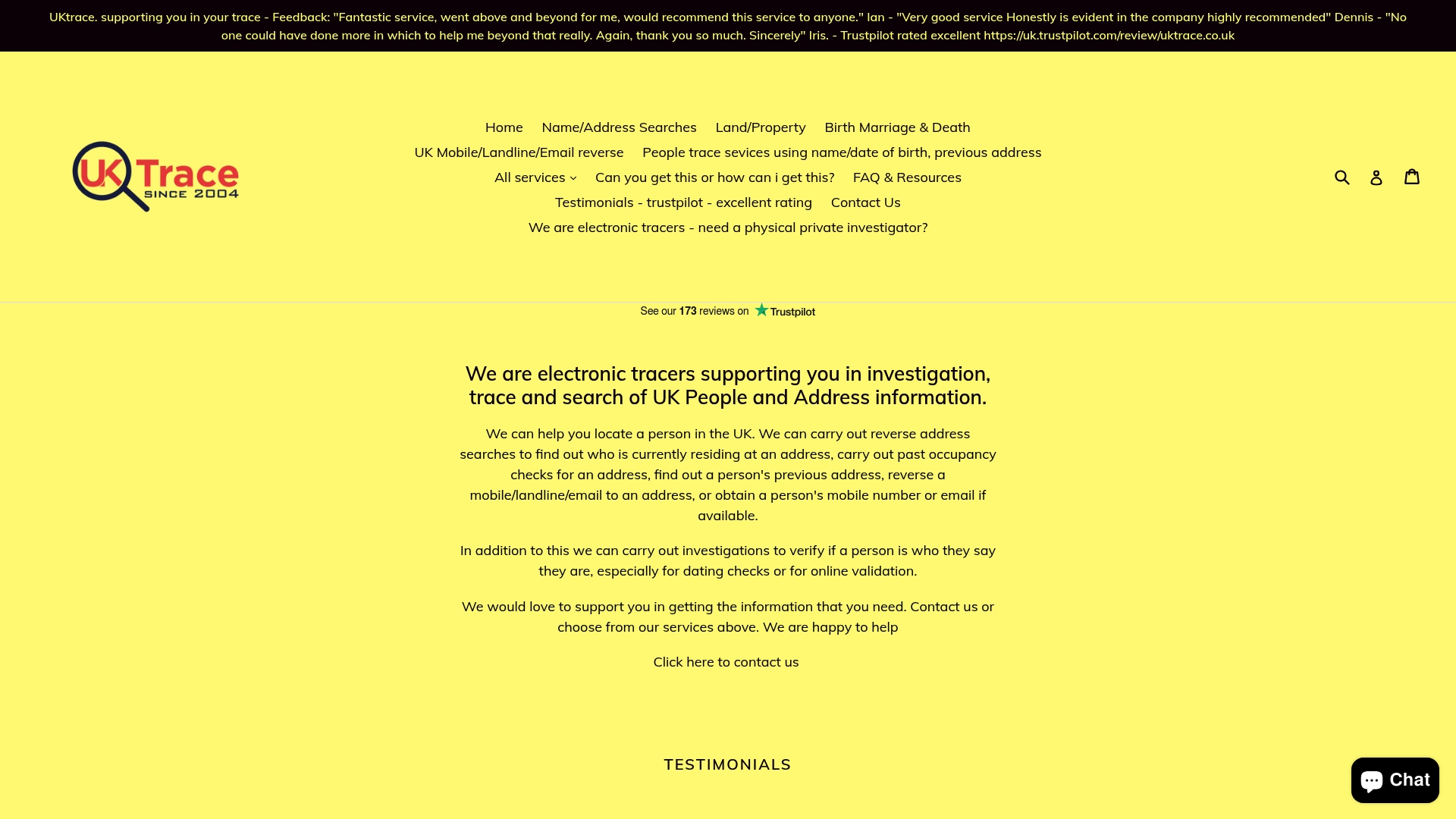
Take control of your investigative needs today with Name and address searches UK and explore our comprehensive range of services tailored for individuals and businesses. With a user-focused approach and a strong emphasis on confidentiality, UKtrace.co.uk is your trusted partner to uncover the precise information you seek. Visit UKtrace.co.uk now and experience expert tracing backed by legal integrity. Don’t let uncertainty hold you back—get started with confidence.
Frequently Asked Questions
What are UK tracing services?
UK tracing services are specialized investigative tools that help locate and verify personal information about individuals in the UK. They provide comprehensive electronic searches for tasks like addressing tracking and personal identification.
How accurate are the results from UK tracing services?
The accuracy of UK tracing services largely depends on the quality of data available and the methods used by the tracing professionals. These services utilize advanced databases and cross-referencing techniques to ensure high levels of accuracy and reliability.
What legal standards govern UK tracing services?
UK tracing services must adhere to several legal standards, including the Data Protection Act 2018, the General Data Protection Regulation (GDPR), and guidelines from the Information Commissioner’s Office (ICO). These regulations ensure that individual privacy is respected while enabling legitimate data collection.
What are the potential risks of using UK tracing services?
Potential risks when using UK tracing services include information incompleteness, false positive matches, data protection restrictions, cost escalation, and time-consuming verification processes. It’s important to evaluate these factors when considering a tracing service.